Table of Contents
- Why Buy Organic Grains in Bulk
- Types of Organic Grains Worth Buying in Bulk
- How to Store Bulk Grains Long Term
- Best Organic Grain Storage Containers
- Cost-Per-Serving Comparison and Budget Planning
- Sourcing Quality Organic Grains: What to Look For
- Home Milling and Sprouting: Getting More From Your Bulk Purchase
- Frequently Asked Questions
Last Updated: October 2, 2026
Why Buy Organic Grains in Bulk
Buying organic grains in bulk makes financial and practical sense for health-conscious households. When you buy organic grains in bulk, you reduce packaging waste, lock in better pricing per pound, and maintain a reliable supply of nutritious staples without frequent reordering. Most home cooks and wellness enthusiasts find that a well-stocked pantry with bulk organic grains eliminates the temptation to reach for processed alternatives when time is tight.
The real advantage goes beyond cost savings. Whole grains retain their nutritional integrity far longer than refined products, and buying in bulk ensures you’re rotating stock regularly enough to capture peak freshness. Many practitioners of traditional or Biblical dietary practices specifically seek whole grains and ancient varieties that aren’t always available in standard retail sizes, making bulk sourcing essential for their meal planning.
Start with grains you already use regularly. If you bake bread weekly, buy wheat berries in bulk. If you cook rice daily, purchase brown rice in larger quantities. This removes the guesswork and ensures you’ll actually use what you purchase before quality declines.
Types of Organic Grains Worth Buying in Bulk
Whole Wheat Berries and Unmilled Grains
Whole wheat berries are the intact kernel of wheat grain, with all three components preserved: the bran, germ, and endosperm. When you buy organic grains in bulk starting with whole wheat berries, you’re purchasing grain at its most nutrient-dense form. Many home millers prefer whole wheat berries because they store longer than flour and deliver superior baking results when milled fresh.
Unmilled grains across all varieties, spelt, rye, barley, oats, maintain their structural integrity during storage far better than their milled counterparts. The protective outer layers slow oxidation and pest infiltration, which matters significantly when you’re storing six months or more of supply. Hard white wheat and hard red wheat varieties each bring distinct flavor profiles and baking properties, so experimenting with small quantities before committing to bulk purchases makes sense.
Sprouting whole berries is another reason to buy unmilled grains in bulk. Sprouted grains offer enhanced digestibility and higher bioavailability of minerals compared to cooked whole grains. If you plan to sprout regularly, buying unmilled varieties in bulk becomes economical quickly.
Ancient Grains and Their Nutritional Advantages
Ancient grains like einkorn, emmer, spelt, and rouge de bordeaux have gained traction among people following traditional recipes or seeking alternatives to modern wheat cultivars. These varieties often contain higher protein levels and different gluten structures than contemporary wheat, which some people tolerate better. When you buy organic grains in bulk that include ancient varieties, you’re investing in ingredients suited to specific dietary frameworks, particularly those aligned with Biblical or heritage cooking traditions.
Pearled barley and other hull-less grains offer another category worth exploring in bulk quantities. These grains require less processing than their pearled counterparts and deliver more intact nutrients. The trade-off is slightly longer cooking times, but many wellness-focused households view this as a worthwhile exchange.
Ancient grains typically cost more per pound than modern wheat, making bulk purchasing especially valuable. Buying in larger quantities reduces the per-serving cost significantly compared to specialty retail pricing.
How to Store Bulk Grains Long Term
Proper storage is the difference between a six-month supply and a two-year supply. Temperature stability matters more than absolute cold; grains stored in a cool, dry pantry at consistent temperatures outlast those in fluctuating environments. Most bulk grain storage succeeds when you maintain temperatures between 50-70°F with relative humidity below 15%.
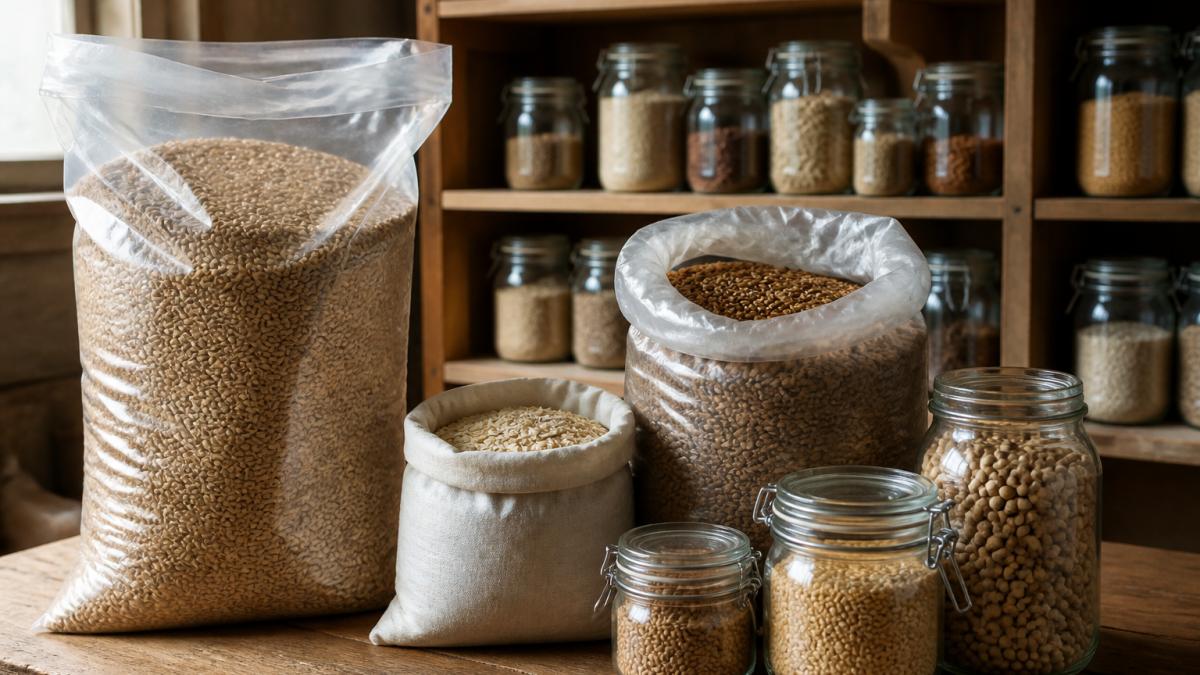
Oxygen exposure accelerates rancidity in grains containing oils, particularly in the germ of whole berries. Food-grade storage containers with airtight seals are non-negotiable. Mylar bags with oxygen absorbers provide excellent long-term protection, as do glass jars with tight-fitting lids. The container choice depends on your space constraints and how frequently you’ll access the grain.
Moisture Content and Grain Quality Testing
Moisture content directly determines shelf life. Grains harvested and dried to 12% moisture or lower store significantly longer than those at 14-15%. When you purchase from suppliers, asking about moisture content separates serious bulk grain sources from casual retailers. Some suppliers include moisture readings on packaging or can provide them upon request.
Testing grain moisture at home requires a moisture meter, a small investment if you’re buying substantial quantities. A reading above 13% suggests you should use that grain sooner or store it in conditions with enhanced oxygen exclusion. Conversely, grain below 10% moisture can sometimes be too dry and may crack during milling, so the ideal range is typically 10-13%.
Pest Management in Home Storage
Grain storage pests, primarily Indian meal moths and weevils, represent the biggest threat to long-term bulk storage success. Prevention beats treatment. Freezing newly purchased grains for 48 hours kills any existing pest life stages before storage begins. This single step, performed immediately upon delivery, eliminates most pest problems before they start.
Diatomaceous earth (food-grade only) sprinkled in storage containers creates a barrier that damages pest exoskeletons. Many bulk grain enthusiasts combine this with airtight containers and consistent temperature to create an environment where pests cannot establish populations. Bay leaves placed inside containers offer modest deterrent properties, though they’re not a substitute for proper sealing.
Monitoring involves occasional visual inspection and, if you’re serious about pest prevention, pheromone traps designed for grain storage pests. These traps alert you to early pest presence before populations become problematic.
Best Organic Grain Storage Containers
Glass jars with rubber gasket seals provide excellent visibility and durability. You can see grain levels at a glance and assess quality without opening containers. The downside is weight and fragility if you’re storing large quantities.
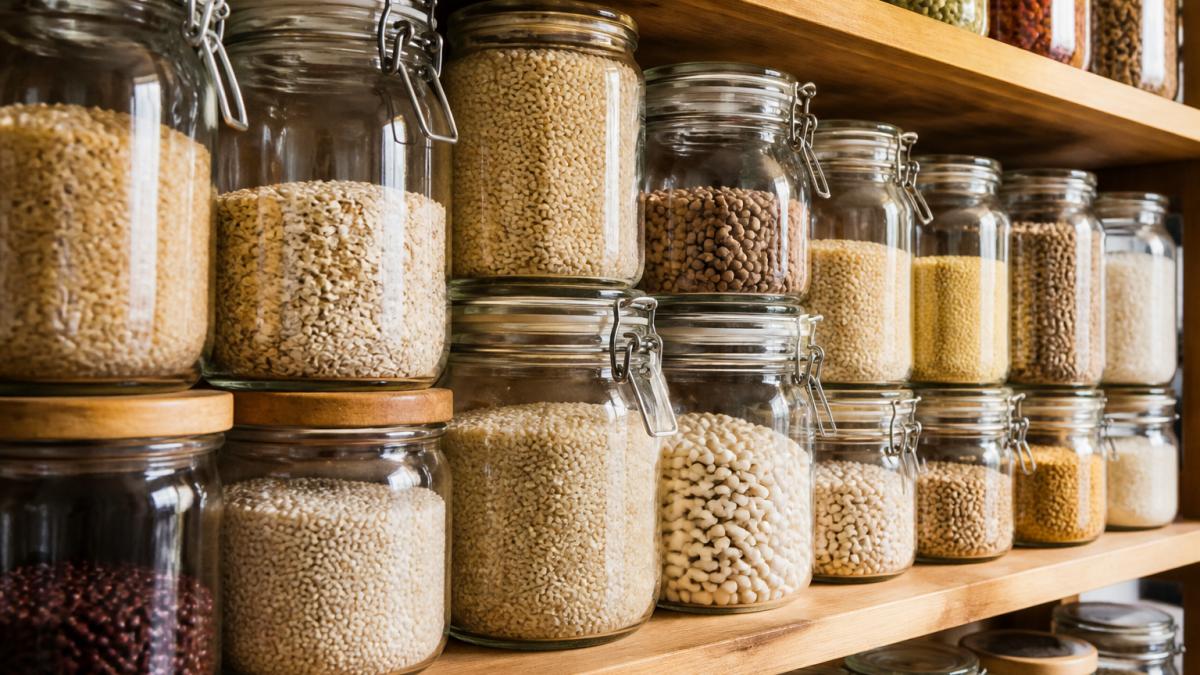
Food-grade plastic buckets with gamma-seal lids offer capacity and portability for larger quantities. A 5-gallon bucket holds roughly 30-35 pounds of grain depending on variety. These work well for grains you access regularly but don’t need to monitor visually.
Mylar bags with oxygen absorbers represent the most space-efficient option for long-term storage. These bags layer aluminum and polyester, creating a barrier against oxygen and moisture.
| Container Type | Best For | Capacity | Visibility | Cost |
|---|---|---|---|---|
| Glass jars | Frequent access, small quantities | 1-2 lbs per jar | Excellent | Moderate |
| Food-grade buckets | Bulk storage, regular use | 30-35 lbs | Limited | Low |
| Mylar bags + absorbers | Long-term storage, maximum shelf life | 5-50 lbs per bag | None | Low-Moderate |
| Vacuum-sealed bags | Medium-term storage, space constraints | 2-5 lbs per bag | None | Low |
Cost-Per-Serving Comparison and Budget Planning
Calculating true cost-per-serving requires knowing both the bulk purchase price and realistic yield after milling or cooking. A pound of whole wheat berries yields roughly 1.5 pounds of flour after milling (accounting for bran loss). That same pound of berries cooks into approximately 3 cups of cooked grain, providing roughly 12 servings depending on portion size.
Don’t over-purchase varieties you’re unfamiliar with. A common mistake is buying large quantities of an ancient grain based on one recipe, only to discover you don’t enjoy the flavor profile. Start with 2-5 pound quantities of new grains, then scale up to bulk sizes once you’ve confirmed regular use.
Sourcing Quality Organic Grains: What to Look For
Certification and Supply Chain Transparency
Certified organic grains carry third-party verification that production methods meet regulatory standards. Look for certification seals from recognized bodies, these indicate that suppliers have undergone audit and maintain documented practices. Certification doesn’t guarantee superior flavor or nutrition, but it does verify that prohibited pesticides and synthetic fertilizers weren’t used.
Farm-Direct and Wholesale Options
Farm-direct purchasing connects you with growers who handle their own harvesting and storage. This channel typically offers the lowest per-pound pricing because intermediaries are eliminated. The trade-off is minimum order quantities, many farms require 25-50 pound minimums per grain variety. For households serious about bulk grain storage, these minimums align well with realistic consumption rates.
Home Milling and Sprouting: Getting More From Your Bulk Purchase
Home milling transforms whole berries into fresh flour with superior nutritional retention compared to commercial flour that’s been stored for months. A grain mill suitable for home use costs between moderate investment ranges, but the equipment pays for itself quickly when you’re buying organic grains in bulk. Fresh-milled flour bakes differently than commercial flour, typically requiring slight adjustments to hydration ratios, but the flavor and nutritional density justify the learning curve.
USDA organic certification standards
Food storage guidelines from University Extension
Frequently Asked Questions
What are the main benefits of buying organic grains in bulk?
Buying organic grains in bulk reduces packaging waste, lowers cost-per-serving compared to smaller packages, and ensures a consistent supply of whole grains for regular cooking and baking. Bulk purchases also allow you to stock high-quality certified organic varieties that may not be available locally, supporting farm-direct sourcing and sustainable agriculture. You gain control over freshness and storage conditions, which directly impacts nutrient density and shelf life.
How should you store bulk organic grains to keep them fresh?
Store grains in airtight, food-grade containers in a cool, dry location away from direct sunlight. Maintain moisture content below 12% to prevent mold and pest activity. Glass jars with tight-sealing lids, Mylar bags with oxygen absorbers, or food-grade buckets all work well. Keep storage temperatures between 50-70°F if possible. Check stored grains every few months for signs of insect damage or moisture, and rotate stock using the first-in, first-out method to maintain freshness.
What is the difference between ancient grains and modern wheat?
Ancient grains like einkorn, emmer, and spelt have not been selectively bred to the same extent as modern wheat varieties. They typically contain higher fiber content, different gluten profiles, and greater nutrient density. Many people with gluten sensitivity find ancient grains easier to digest, though they are not gluten-free. Ancient grains also have stronger baking qualities for certain applications and support biodiversity in agriculture, making them a preferred choice for those following traditional or faith-based dietary practices.
How do you identify high-quality organic grain suppliers?
Look for suppliers with certified organic certification from recognized bodies, transparent supply chain information, and farm-direct sourcing options. Check for clear labeling of harvest dates and information about moisture content and grain cleaning processes. Read customer reviews focusing on product condition upon arrival and long-term storage performance.