Table of Contents
- What You’ll Need Before You Start
- Understanding Organic Pantry Essentials
- Building an Organic Pantry on a Budget
- Buying Organic Food in Bulk
- How to Store Pantry Staples Properly
- Step-by-Step: Building Your Pantry From Scratch
- Common Mistakes to Avoid
- Frequently Asked Questions
Last Updated: October 5, 2026
What You’ll Need Before You Start
To build organic pantry staples successfully, you need planning before you spend money.
Inventory what you have, check expiration dates, and use up items close to expiring before restocking. Then set a realistic budget: building an organic pantry doesn’t happen overnight, and a gradual approach beats stocking everything at once.
Understanding Organic Pantry Essentials
An organic pantry is built on whole foods you can use for multiple meals, ingredients without synthetic pesticides, artificial preservatives, or chemical additives.
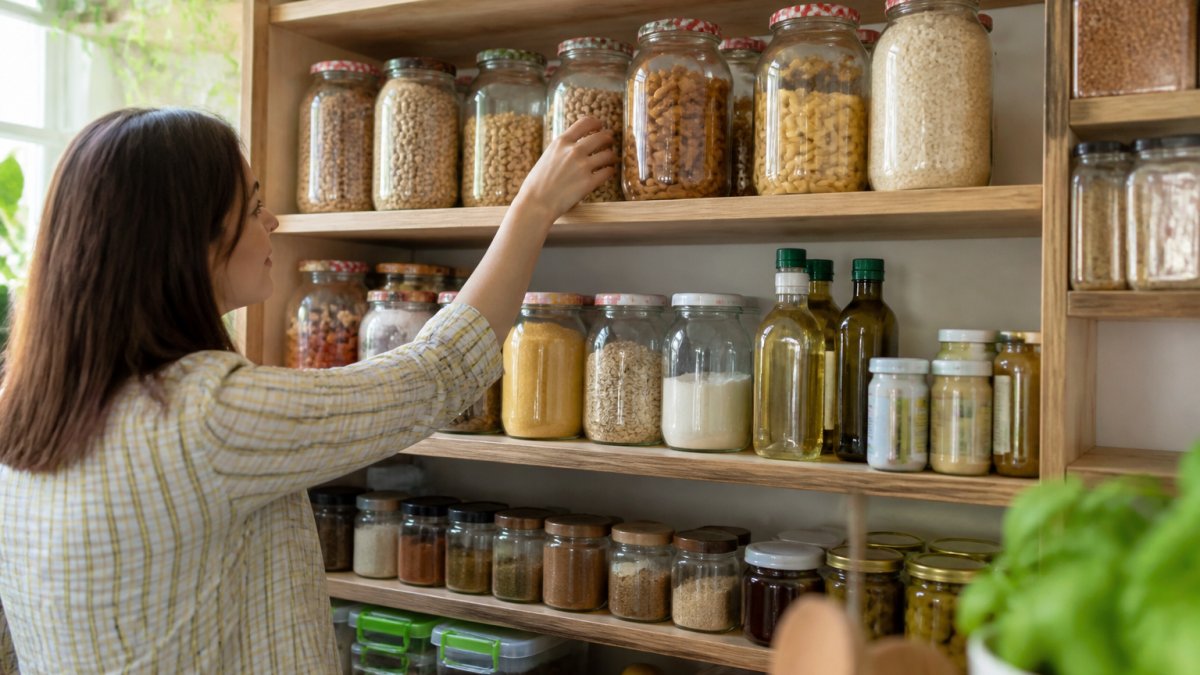
Choose versatile staples that store well, cost less per serving, and work across many recipes: grains, beans, oils, and spices form the backbone of any organic pantry.
Whole Grains, Rice, and Pasta
Whole grains are non-negotiable: affordable, shelf-stable, and the base of countless meals.
Brown rice is your workhorse, pairing with beans, vegetables, and proteins.
Store grains in airtight containers away from heat and light, and label with the purchase date so you use older stock first.
Beans, Legumes, and Plant-Based Proteins
Dried beans are cheap and last for years.
Lentils cook fastest (20 to 30 minutes), chickpeas work in curries and salads, and black beans and pintos suit soups and stews.
Canned beans are fine when you’re short on time, they cost more per serving but need no soaking or cooking.
Healthy Fats and Cooking Oils
You need at least two oils: one for cooking, one for finishing. Extra virgin olive oil suits salads and low-heat cooking, coconut oil works for baking and medium heat, and avocado oil handles higher temperatures.
Buy oils in dark bottles and store away from heat and sunlight. Invest in cold-pressed, organic oils rather than the cheapest option.
Nuts and seeds are important fats too. Almonds, walnuts, sunflower seeds, and flax seeds add texture and nutrition; refrigerate them to prevent rancidity.
Spices, Herbs, and Seasonings
Spices and dried herbs transform simple ingredients into delicious meals. Start with basics: salt, black pepper, garlic powder, cumin, and paprika.
Buy spices in small quantities, since they lose flavor when exposed to light and heat.
Dried herbs like oregano, basil, and thyme keep well. They’re more affordable than fresh and last for months.
Building an Organic Pantry on a Budget
Cost is often the biggest concern when you build organic pantry items, but organic staples are more affordable than many expect when you buy smart and prioritize.
Start With a Cost-Per-Serving Mindset
Instead of the sticker price, calculate what each meal costs. A 1-pound bag of organic dried lentils yields about 6 to 7 cups cooked, so a 1-cup serving costs a fraction of a dollar, versus a can of organic lentils at about 1.5 cups for more per cup.
Apply the same math to grains: a 2-pound bag of organic brown rice yields roughly 10 to 12 cups cooked, and a half-cup serving costs pennies.
Keep a simple notebook or spreadsheet with three columns: item, package price, and estimated servings per package. Divide price by servings to get your true cost per serving. After a few shopping trips, you’ll know which organic staples give you the most meals per dollar.
Prioritize Which Organic Items Matter Most
Buying everything organic isn’t realistic for every budget. Prioritize based on how the food is grown and how much you consume.
Buy organic when it matters most:
- Grains and beans you eat daily. Organic rice, oats, lentils, and beans are affordable in bulk and form the base of most meals. The cost difference between conventional and organic is often small when bought dried.
- Thin-skinned produce you eat whole. Organic berries, spinach, apples, and tomatoes are worth the premium if your budget allows, because you eat the skin.
- Oils and fats. Organic extra virgin olive oil and coconut oil are worth prioritizing because you use them in small amounts and quality affects both taste and shelf life.
Where conventional can be fine:
- Thick-skinned produce like avocados, bananas, and oranges, where the peel is discarded.
- Items you use rarely or in tiny amounts, where the organic premium adds little practical value.
This lets you spend your organic budget where it has the most impact on your diet and wallet.
Buy in Bulk Without Overspending
Buying in bulk reduces cost per serving, but only if you use what you buy.
A practical rule: buy in bulk only items you use at least weekly and that store well for months.
Many grocery stores and online retailers sell organic staples in bulk bins or large bags.
Use Frozen and Canned Strategically
Frozen organic vegetables are often cheaper than fresh, just as nutritious, and last for months, reducing waste. Stock frozen spinach, broccoli, peas, and mixed vegetables for quick meals.
Canned organic beans and tomatoes are convenient and affordable. They cost more per serving than dried but save time, so keep a few cans for busy nights and use dried beans for planned meals.
Shop Sales and Store Brands
Many supermarkets discount organic staples periodically. When your regular items go on sale, buy extra, especially long-lasting items like grains, beans, and canned goods.
Store brands are another reliable way to save: many supermarkets offer organic store-brand versions at lower prices than name brands, often with identical quality because the same suppliers produce both.
Skip Specialty Items at First
Organic quinoa, exotic spices, and specialty flours are great additions, but they are not the foundation. Master the basics, rice, beans, oats, and simple spices, before expanding. You’ll use basics more often and get more meals per dollar.
A budget organic pantry is built on dried grains and beans, a few quality oils, and spices you use often. Prioritize organic for the foods you eat daily and buy in bulk only what you will use within a few months. This keeps your cost per serving low while still stocking your pantry with organic staples.
Buying Organic Food in Bulk
Buying organic food in bulk saves money and reduces packaging waste.
Local co-ops and buying clubs let you split large purchases with other families, sharing cost and product.
Warehouse clubs sometimes carry organic options. Check what they offer before paying membership fees.
Buy dried goods in bulk: grains, beans, lentils, nuts, and seeds. These store for months or years.
How to Store Pantry Staples Properly
Proper storage keeps food fresh longer, prevents waste, and protects your investment in organic staples. Temperature, humidity, containers, and rotation all matter.
Storage Containers and Organization
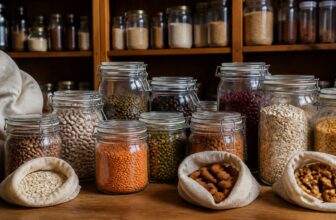
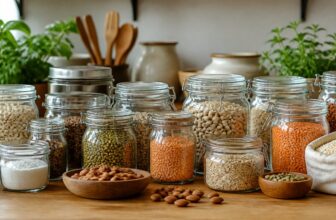
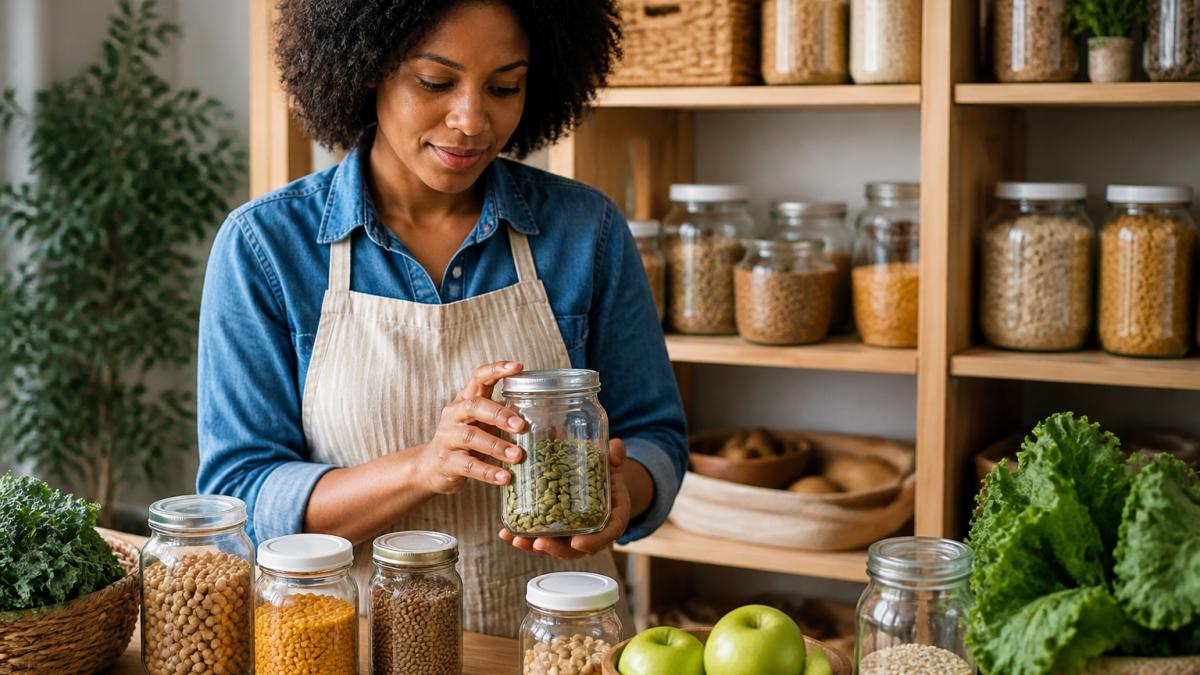
Glass jars with airtight lids are ideal for grains, beans, and flours: they keep food fresh, let you see what you have, and clean easily.
Label everything with the item name and purchase date to avoid confusion and use older stock first, masking tape and a marker work fine.
Organize by category, grains together, beans together, spices together, to make cooking easier and spot when you’re running low.
Use a “first in, first out” rotation. When you buy new items, move the older ones to the front. This simple habit prevents spoilage and ensures you use what you have before it expires.
Temperature, Humidity, and Shelf Life
Keep your pantry cool and dry: ideally 50 to 70 degrees Fahrenheit with humidity below 50 percent.
Keep pantry doors closed. Don’t store items above the stove, near windows, or in direct sunlight.
Here are general shelf-life guidelines for common organic pantry staples when stored properly:
- White rice: 1 to 2 years
- Brown rice: 6 to 12 months (the oils in the bran go rancid over time)
- Whole grains (oats, quinoa, whole wheat flour): 6 to 12 months
These are general ranges. Always check the package for specific dates and use your senses.
How to Tell If Something Has Gone Bad
Even with good storage, food can spoil. Watch for these signs:
Grains and beans:
- Insects: Small moths, weevils, or beetles. If you see them, discard the infested item and check nearby containers.
- Moisture: Clumping or dampness means moisture got in. Discard if there’s any sign of mold.
- Rancid smell: Brown rice, whole grains, and nuts can go rancid. A sour or paint-like smell means they’re past their prime.
Oils:
- Rancid smell: A stale, bitter, or crayon-like smell. Discard.
- Cloudiness or sediment: Some oils solidify in the cold, which is fine. But if they look cloudy at room temperature, they may be spoiled.
Canned goods:
- Bulging, leaking, or dented cans: Discard immediately. These can be signs of bacterial growth.
- Off smell or color when opened: Discard.
Spices:
- Loss of aroma: If a spice smells like dust instead of its usual scent, it’s lost its flavor. It won’t make you sick, but it won’t season your food either.
Never taste food to check if it’s spoiled. If you’re unsure, throw it out. The cost of replacing a jar of beans is far less than the cost of foodborne illness.
Preventing Pests and Moisture
Insects and moisture are the two biggest threats to a pantry. Keep them out by:
- Use airtight containers. Insects can chew through thin plastic bags and cardboard boxes. Glass or heavy plastic with tight seals keeps them out.
- Freeze new bulk items for 48 hours. If you buy grains or beans from bulk bins, freeze them for two days before transferring to containers. This kills any insect eggs that may be present.
- Keep shelves clean. Wipe down shelves regularly and clean up spills immediately. Crumbs attract pests.
Refrigerator and Freezer Storage
Not everything belongs in the pantry, some items last longer refrigerated or frozen:
- Nuts and seeds: Store in the refrigerator or freezer to prevent rancidity. They’ll last up to a year.
- Whole grain flours: Refrigerate or freeze to extend shelf life. They go rancid faster than white flour.
- Oils: Some oils, like walnut or sesame, are best kept in the refrigerator. Olive oil and coconut oil can stay in the pantry.
Store pantry staples in airtight containers in a cool, dark, dry place. Label everything with the purchase date and rotate stock so older items get used first. Know the shelf life of each category and check regularly for signs of spoilage. When in doubt, throw it out. Proper storage protects your organic investment and keeps your pantry safe and functional.
Step-by-Step: Building Your Pantry From Scratch
You don’t need to buy everything at once. A phased approach works better and costs less.
Month 1: Establish Your Foundation
Start with the essentials. Your first-month shopping list:
- Brown rice and one other grain (oats or quinoa)
- Dried beans (black beans, pinto beans, chickpeas)
- Lentils
This foundation covers basic meals: rice and beans, pasta with tomato sauce, grain bowls, and soups. You’re not spending a fortune, and you’re building the core of your organic pantry.
Month 2-3: Add Variety and Depth
Once you’ve used your first month’s staples, you know what works. Add variety:
- A second grain and a second oil
- Whole wheat pasta
- Additional spices (paprika, thyme, cinnamon)
This expands your meal options across cuisines and flavor profiles, so cooking becomes less repetitive.
Month 4+: Refine and Maintain
By now you know your household’s preferences and what sits unused. Refine:
- Replace items as you use them
- Try one new ingredient each month
- Adjust quantities based on what you’ve learned
You’re no longer building from scratch but maintaining and improving your organic pantry, sustainable long-term.
Common Mistakes to Avoid
Most people make predictable mistakes when building an organic pantry.
Don’t ignore storage: buying organic staples means nothing if they spoil.
Don’t buy specialty items first.
Don’t skip the freezer.
Don’t forget to rotate stock. Use older items first.
Don’t assume organic always costs more.
Frequently Asked Questions
What should I put in an organic pantry first?
Start with versatile staples that form the foundation for most meals: organic whole grains (oats, brown rice, quinoa), dried beans and lentils, organic extra virgin olive oil, sea salt, and basic spices. These items are shelf-stable, affordable, and work across multiple cuisines and dietary approaches. Once these basics are established, add canned tomatoes, coconut milk, and nut butters to expand your meal options.
How can I tell if a product is truly certified organic?
Look for third-party certification labels on packaging, such as USDA Organic, EU Organic, or other recognized certifications specific to your region. These labels indicate the product has been independently verified to meet organic standards. Check the ingredient list to ensure all major components are organic, not just the primary ingredient. When buying from Allstarhealth or similar retailers, product descriptions should clearly state certification status and farming practices.
How long do organic pantry staples actually last?
Shelf life varies by product type. Whole grains and dried beans last 1-2 years when stored in cool, dry conditions in airtight containers. Oils stay fresh for 1-2 years, though some degrade faster when exposed to heat or light. Spices maintain flavor for 6-12 months. Canned goods typically last 2-5 years. Store everything away from direct sunlight, moisture, and temperature fluctuations to maximize freshness. Rotating stock using the ‘first in, first out’ method prevents waste.
Is buying organic food in bulk actually worth the cost?
Bulk buying typically reduces per-unit costs compared to smaller retail packages, making it worthwhile for staple items you use regularly. The savings are most significant for grains, beans, oils, and spices. However, bulk purchases only save money if you actually use the products before they expire. Calculate your household usage first, invest in proper storage containers, and buy only items your household regularly consumes to maximize value.
Building an organic pantry takes time, but it’s worth the effort. You’ll cook more at home, save money, and know exactly what’s in your food. Start small, buy smart, and store properly. Your family will eat better, and your wallet will thank you. At Allstarhealth, we’re here to help you find the organic pantry staples you need at prices that make sense. Explore our curated selection of natural and organic food products, and start building your healthy pantry today.