Table of Contents
- Why Organic Oils Matter for High-Heat Cooking
- Understanding Smoke Points and Heat Stability
- Cooking Oil Smoke Point Chart: Which Oils Perform Best
- Best Oil for Frying: Choosing the Right Organic Option
- Is Avocado Oil Good for You? Benefits and Heat Performance
- What Organic Certification Really Means for Cooking Oils
- Oxidative Stability: Beyond the Smoke Point
- Storing and Reusing Organic Cooking Oils Safely
- Frequently Asked Questions
Last Updated: October 11, 2026
Why Organic Oils Matter for High-Heat Cooking
When cooking at high temperatures, not all oils perform the same way. Choosing the best organic oils for high heat cooking means balancing heat performance with nutritional value.
Organic oils come from plants grown without synthetic pesticides or fertilizers. Some can handle high heat, while others break down and release harmful compounds when temperatures spike.
When oil breaks down at high temperatures, it oxidizes, creating free radicals and compounds that may harm your cells. Picking an organic oil rated for high-heat cooking protects your health.
Understanding Smoke Points and Heat Stability
Smoke point is the temperature at which an oil begins to visibly smoke and break down. However, smoke point doesn’t measure oxidative stability, how well an oil resists breaking down chemically during cooking.
An oil might not smoke until 450°F but can still oxidize at lower temperatures over time.
Oxidative stability depends on fatty acid profile: oils with saturated and monounsaturated fats resist oxidation better than those high in polyunsaturated fats. Refined oils have impurities removed, raising smoke point; unrefined oils retain more nutrients but perform worse at high temperatures.
For high-heat cooking, the best organic oils for high heat cooking are chosen based on both smoke point and fatty acid composition.
Cooking Oil Smoke Point Chart: Which Oils Perform Best
Here’s a practical breakdown of organic oils and their heat performance:
| Organic Oil | Smoke Point | Best Uses | Fat Profile |
|---|---|---|---|
| Avocado oil (refined) | 450-500°F | Frying, searing, roasting | High monounsaturated |
| Coconut oil (refined) | 350-400°F | Medium-heat cooking, baking | High saturated |
| Olive oil (extra-virgin) | 190-210°F | Salads, drizzling, low-heat | High monounsaturated |
| Olive oil (refined) | 400-420°F | Sautéing, light frying | High monounsaturated |
| Safflower oil (refined) | 450°F | Frying, roasting | High polyunsaturated |
| Almond oil | 420°F | Sautéing, baking | High monounsaturated |
| Sesame oil | 350-410°F | Stir-frying, sautéing | Mixed profile |
High-Smoke-Point Organic Options
Refined avocado oil tops the list for high-heat cooking, staying stable up to 450-500°F. It’s rich in monounsaturated fats that resist oxidation and has a neutral flavor. The trade-off: it costs more than alternatives, but delivers consistent high-heat results.
Refined safflower oil handles heat up to 450°F with neutral taste and lower cost than avocado oil.
When shopping for high-heat organic oils, look for the word “refined” on the label. Refined oils have been processed to remove impurities, raising their smoke point significantly. Unrefined oils taste better but can’t handle high heat.
Medium-Heat Organic Oils
Refined olive oil works up to 400-420°F and is more affordable than avocado oil. Don’t confuse it with extra-virgin olive oil (smoke point 190-210°F), which is unsuitable for cooking.
Refined coconut oil reaches 350-400°F for medium-heat cooking and baking but is high in saturated fat. Almond and sesame oils handle 350-410°F for sautéing and stir-frying, adding distinct flavors.
Best Oil for Frying: Choosing the Right Organic Option
Frying demands oil that withstands sustained high temperatures, resists oxidation, and tolerates reuse. Match your oil choice to the specific frying method and the oil’s oxidative stability.
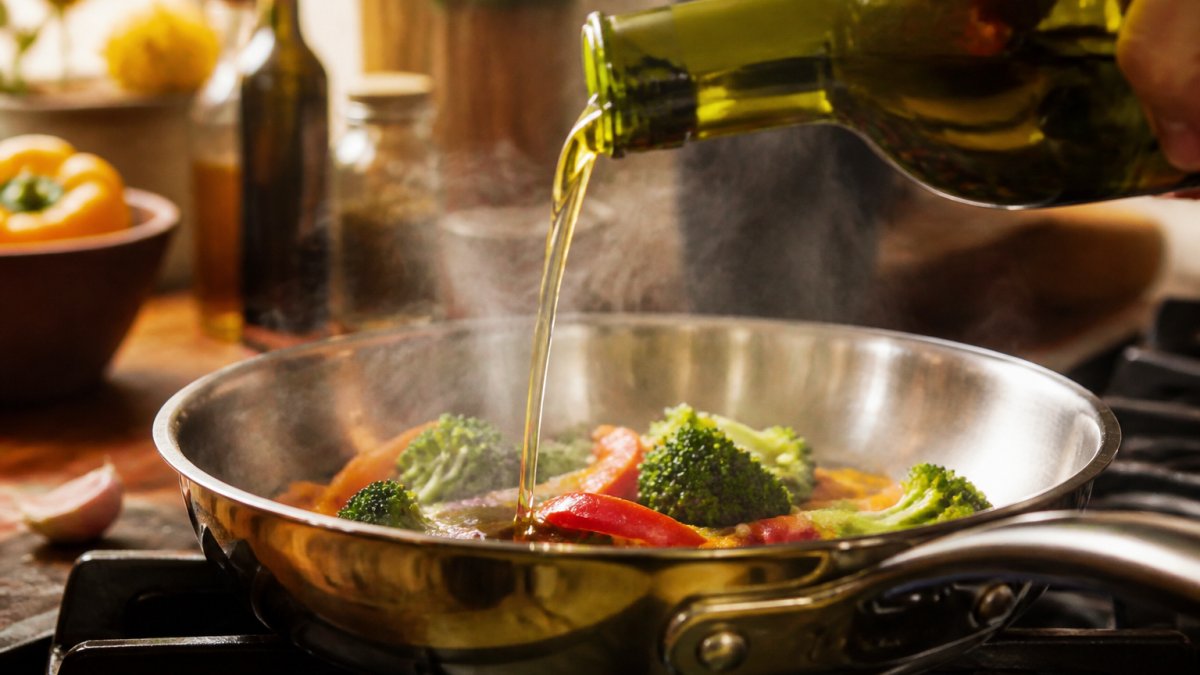
Temperature and duration guide for frying methods:
- Pan-frying: 325-375°F. Refined avocado oil is preferred for neutral flavor and oxidative stability.
- Deep-frying: 350-375°F. Refined avocado oil is the best organic choice for prolonged immersion and repeated heating.
- Stir-frying: 350-400°F. Refined safflower or avocado oil work well; sesame oil adds flavor.
Refined avocado oil reaches 450-500°F and resists oxidation better than alternatives due to its 70% monounsaturated fat content. It maintains stability across multiple frying sessions. Refined safflower oil is a budget-friendly alternative with similar performance but slightly lower oxidative stability.
Avoid unrefined oils for frying; they have lower smoke points, oxidize faster, and degrade within one or two uses.
Signs your frying oil has degraded:
Even quality organic oils degrade over time and repeated heating. Watch for these warning signs that it’s time to discard the oil:
- Darkening color, Fresh oil is clear or pale yellow. Darkened oil indicates oxidation and breakdown. Discard it.
- Foaming during heating, Foam appears when water or degraded compounds are present. This signals the oil is breaking down. Stop using it.
- Off or rancid smell, A sour, musty, or burnt smell means oxidation has advanced. Trust your nose, rancid oil tastes bad and may contain harmful compounds.
- Smoking at lower temperatures, If oil smokes at 325°F when it previously didn’t, oxidation has lowered its smoke point. Replace it.
- Visible particles or cloudiness, Sediment or cloudiness indicates food particles or water contamination. Strain the oil; if cloudiness persists, discard it.
- Sticky or gummy residue on the pan, This signals polymerization, a chemical breakdown that makes the oil unsuitable for cooking.
Most quality organic oils can be safely reused 3-4 times for pan-frying, or 2-3 times for deep-frying.
How to strain and store frying oil for reuse:
- Cool the oil completely (1-2 hours).
- Strain through fine mesh to remove food particles.
- Store in a clean, airtight glass container labeled with oil type and date.
- Keep in a cool, dark cabinet away from heat and light.
- Use within 1-2 months.
Safe disposal of used cooking oil:
Never pour used cooking oil down the drain; it clogs pipes and damages water treatment systems. Let it cool, pour into a disposable container, seal it, and take it to a local recycling center. Search “used cooking oil recycling near me” to find a facility. If unavailable, seal and place in trash as a last resort.
Never heat an oil past its smoke point. The visible smoke signals that the oil is breaking down and releasing compounds you don’t want in your food. If smoke appears, remove the pan from heat immediately and let it cool. Discard the oil if it has smoked; do not attempt to reuse it. Start fresh with a new batch of oil.
For frying, refined avocado oil is the best organic choice due to its high smoke point and oxidative stability. Match your oil temperature to your frying method (pan-frying at 325-350°F, deep-frying at 350-375°F). Strain oil after each use, watch for signs of degradation, and discard after 3-4 uses. Never pour used oil down the drain; take it to a local recycling center.
Is Avocado Oil Good for You? Benefits and Heat Performance
Avocado oil is rich in monounsaturated fats that support cardiovascular health and contains lutein and zeaxanthin for eye health. Refined avocado oil’s high smoke point prevents oxidation during cooking. Note: benefits apply to refined avocado oil; unrefined has a lower smoke point. While costlier than canola oil, it’s a smart investment for high-heat cooking.
What Organic Certification Really Means for Cooking Oils
Organic certification is often misunderstood. Many assume organic equals unrefined or superior for high-heat cooking. Understanding what the label guarantees is essential.
Organic certification means plants were grown without synthetic pesticides or fertilizers and verified by a third-party certifier. However, it does NOT address heat stability, smoke point, oxidative performance, or guarantee the oil is unrefined.
The refined vs. unrefined confusion:
You can buy refined organic oils. The refining process removes impurities without synthetic chemicals. Unrefined organic oils retain flavor and nutrients but have lower smoke points (190-350°F); refined organic oils have higher smoke points (350-500°F) and better oxidative stability for high-heat cooking.
When shopping, look for: (1) organic certification mark, (2) “refined” or “unrefined” designation, and (3) smoke point or intended use. If a label doesn’t specify refined or unrefined, assume it’s unrefined with a lower smoke point.
Pesticide standards and what they mean:
Organic certification limits synthetic pesticide residues to levels far below what the EPA considers safe for food. Studies show organic produce typically has lower pesticide residues than conventional produce.
If avoiding pesticide residues is your primary concern, organic is worth the premium. If heat performance is your goal, focus on smoke point and refining method instead.
The bottom line:
Organic certification verifies farming practices and processing standards, not cooking performance. An organic oil can be refined or unrefined, high-heat or low-heat. Always check the smoke point and processing method alongside the organic label.
Organic certification guarantees farming and processing standards, not heat stability. A refined organic oil outperforms an unrefined organic oil at high temperatures. Always verify the smoke point and refining method on the label, regardless of organic status.
Oxidative Stability: Beyond the Smoke Point
Smoke point is easy to measure. Oxidative stability is harder to see but more important for your health.
Oxidation happens when oil molecules break apart due to heat, light, or oxygen exposure. The result is rancidity and free radicals. Oxidized oil tastes off and may harm your cells.
Saturated and monounsaturated fats resist oxidation. Polyunsaturated fats oxidize easily. That’s why avocado oil (high in monounsaturated fat) outperforms canola oil (high in polyunsaturated fat) during high-heat cooking, even if both have similar smoke points on paper.
Refining improves oxidative stability by removing compounds that promote oxidation. An unrefined oil oxidizes faster than a refined one at the same temperature.
Storage matters too. Light and heat speed oxidation. Keep organic oils in a cool, dark cabinet or the refrigerator. Buy smaller bottles you’ll use within a few months. Old oil oxidizes whether you cook with it or not.
The practical takeaway: for high-heat cooking, choose an oil high in monounsaturated or saturated fats in refined form. Check the label for processing method. Store it properly. This combination protects you from oxidative damage.
Storing and Reusing Organic Cooking Oils Safely
Proper storage extends the life of your organic oils and protects their quality.
Keep oils in a cool, dark place. Heat and light trigger oxidation. A cabinet away from the stove is better than a counter near a window. Some cooks refrigerate oils, which slows oxidation further. Refined oils may solidify in the fridge, that’s fine. They’ll liquefy again at room temperature.
Smell your oil before cooking. Rancid oil smells sour or off. Discard it. Using rancid oil wastes money and exposes you to oxidized compounds.
Reusing oil saves money, but do it safely. After frying, let the oil cool. Strain out food particles using a fine mesh or cheesecloth. Store the strained oil in a clean container. Most quality organic oils can be reused 3-4 times before quality degrades.
Don’t reuse oil if it foams, smells off, or turns dark. These signs mean oxidation has advanced too far. Fresh oil is safer and tastes better.
For disposal, never pour used oil down the drain. It clogs pipes and harms water systems. Let it cool, pour it into a container, and take it to a local recycling center. Many communities accept used cooking oil.
Frequently Asked Questions
What cooking oil do you use for high heat?
For high-heat cooking, choose organic oils with smoke points above 400°F (204°C). Avocado oil, refined coconut oil, and high-oleic sunflower oil are excellent organic options. Avocado oil stands out for searing and frying because it combines a high smoke point with a favorable fatty acid profile. Always check the label to ensure the oil is organic and minimally processed, as this affects heat stability.
Is avocado oil good for you?
Yes. Avocado oil is rich in monounsaturated fats and contains vitamin E. Unlike some refined oils, high-quality organic avocado oil retains its value even when heated. It’s particularly beneficial for high-heat cooking because it resists oxidation better than many alternatives. Choose cold-pressed organic avocado oil, though refined versions handle extreme heat slightly better.
What makes an oil suitable for high-heat cooking?
Heat suitability depends on three factors: smoke point (the temperature at which oil breaks down), oxidative stability (resistance to damage from oxygen and heat), and fatty acid composition. Oils high in monounsaturated fats and low in polyunsaturated fats remain stable at high temperatures. Organic certification alone doesn’t guarantee heat performance, so check processing method and smoke point. Refined organic oils typically handle higher temperatures than cold-pressed versions.
Does organic certification affect an oil’s smoke point?
Organic certification ensures the oil comes from pesticide-free sources, but it doesn’t directly change smoke point. However, processing method does. A cold-pressed organic oil has a lower smoke point than a refined organic oil from the same source. Refining removes impurities and water, raising the smoke point. For high-heat cooking, choose refined organic oils or select cold-pressed varieties suited to medium-heat tasks like salad dressings and marinades.
Choosing the right organic oil for high-heat cooking means balancing smoke point, fatty acid composition, and refining level. Refined avocado oil and safflower oil deliver the best heat performance. At Allstarhealth, we stock a curated selection of organic cooking oils suited for every temperature and cooking method. Browse our collection to find the organic oils that match your kitchen needs and wellness goals.