Table of Contents
- Why Essential Pantry Staples Matter for Holistic Health
- Whole Grains and Grain Alternatives
- Plant-Based Pantry Essentials for Protein and Fiber
- Gut-Healthy Pantry Staples That Support Digestive Wellness
- Healthy Cooking Oils and Fats
- How to Stock a Healthy Pantry on a Budget
- Clean Ingredients and Minimally Processed Foods
- Conclusion
- Frequently Asked Questions
Last Updated: October 17, 2026
Why Essential Pantry Staples Matter for Holistic Health
Building a healthy pantry is one of the most practical steps toward sustainable wellness.
A pantry filled with essential pantry staples for holistic health becomes your foundation for preventative nutrition.
The research from American Heart Association guidance on pantry staples shows that households stocking whole grains and legumes make measurably different food choices than those relying on processed alternatives.
What makes a staple “essential”?
Below, we’ll cover the foods that belong in every health-conscious kitchen, why they matter for gut health and wellness, and how to build this pantry on a budget.
Whole Grains and Grain Alternatives
Brown Rice, Quinoa, and Oats
Whole grains are non-negotiable for a pantry built on holistic health principles.
Brown rice is the workhorse grain: versatile, shelf-stable, and at home in grain bowls, soups, and side dishes.
Quinoa is a complete protein with all nine essential amino acids, invaluable for plant-based eating, and cooks in about 15 minutes.
Old-fashioned oats serve double duty: breakfast staple and savory ingredient.
Storage and Shelf Life
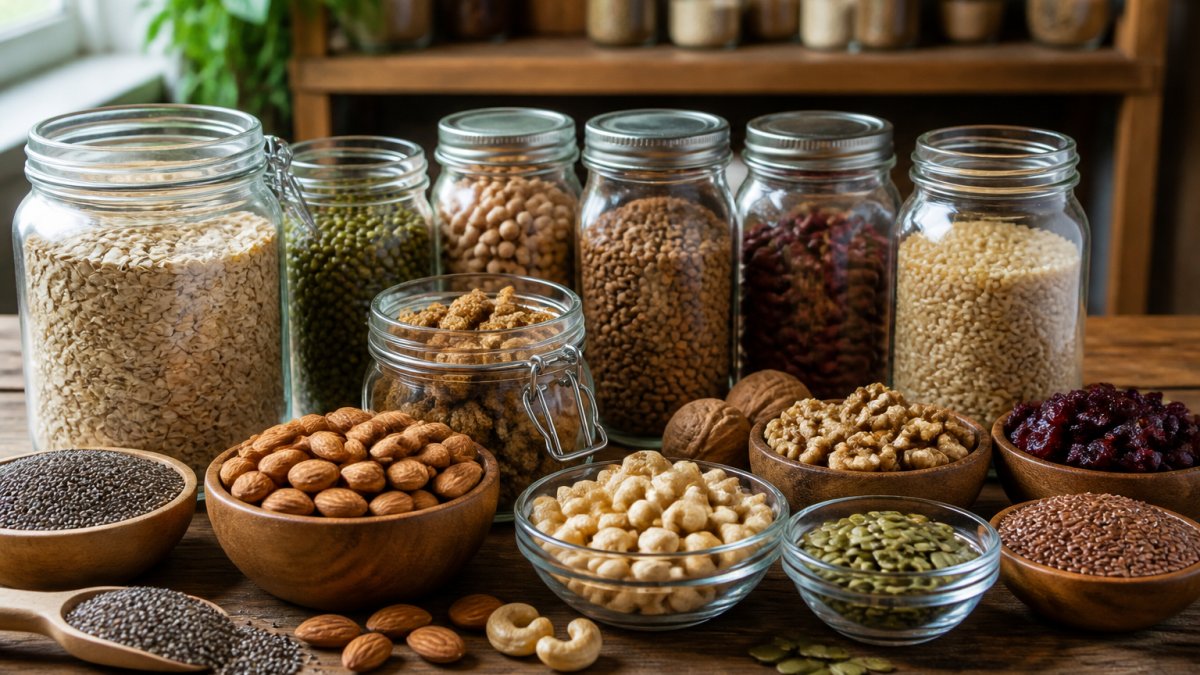
Whole grains stay fresh 6-12 months in airtight containers in a cool, dark pantry. Glass jars let you see when you’re running low; in humid climates, add a food-grade oxygen absorber.
The key mistake: buying whole grains in bulk without a storage plan. They absorb moisture, go rancid, or attract pests. Proper storage means your investment lasts.
Plant-Based Pantry Essentials for Protein and Fiber
Beans, Lentils, and Legumes
Plant-based pantry essentials form the protein backbone of a healthy pantry checklist. Legumes are affordable, shelf-stable, and packed with fiber and protein.
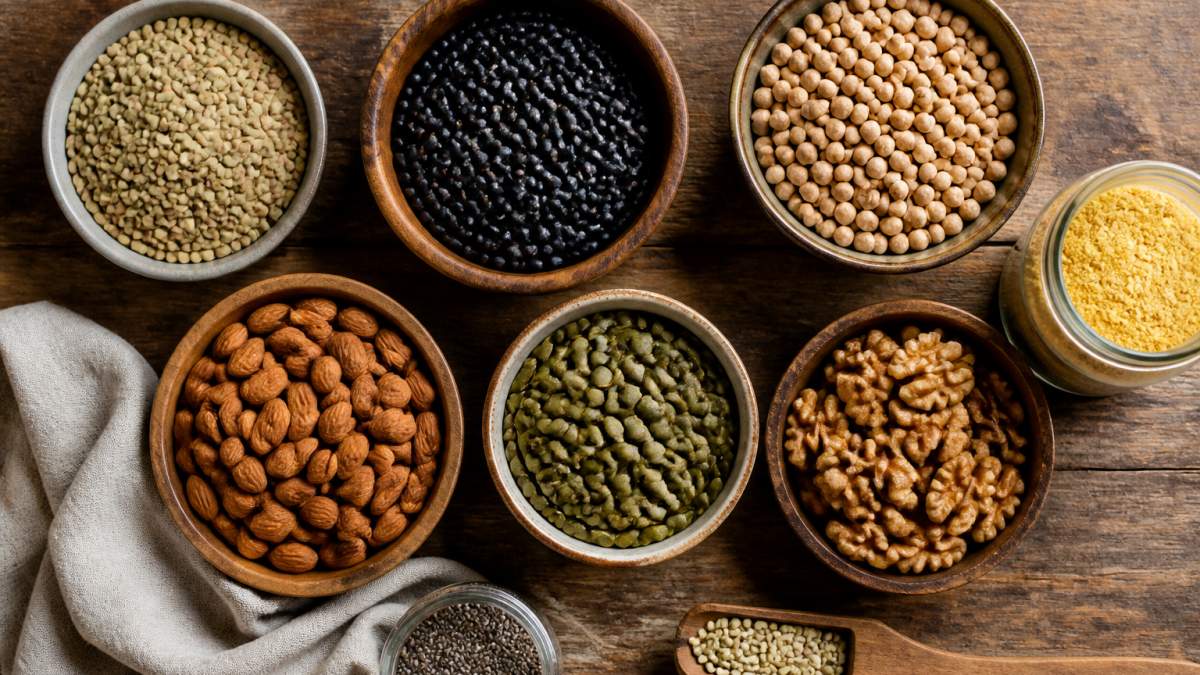
Lentils come in several varieties: brown hold their shape in soups and salads, red cook down quickly for curries and purees, and green have an earthy flavor.
Canned beans are a legitimate shortcut when time matters: pre-cooked, no planning, and ready for quick weeknight meals. Keep a variety on hand.
Nuts, Seeds, and Nutritional Yeast
Nuts and seeds add healthy fats, protein, and minerals. Pumpkin, flax, chia, and sunflower seeds work in salads, smoothies, baked goods, and snacks.
Store nuts and seeds airtight in a cool place; their fat makes them go rancid faster than grains, and a freezer works well for longer storage.
Nutritional yeast is a deactivated yeast that tastes cheesy and adds B vitamins, especially B12, crucial for plant-based eaters.
Gut-Healthy Pantry Staples That Support Digestive Wellness
Gut health is one of the most overhyped corners of the wellness aisle, so separate what the evidence supports from what marketing implies. A pantry built around fiber variety, consistent fermented foods, and minimally processed ingredients does more for digestive wellness than any single “detox” product; staples feed the gut bacteria that support digestion, regularity, and metabolic health.
Fiber Variety Beats Fiber Quantity
Most adults fall short of the roughly 25-30 grams of fiber recommended daily, and the bigger issue is usually variety rather than total grams.
- Soluble fiber (oats, psyllium husk, legumes, apples) forms a gel that softens stool and can help with both constipation and loose stools.
- Insoluble fiber (whole wheat, brown rice, nuts, vegetable skins) adds bulk and speeds transit.
- Resistant starch (cooked-and-cooled rice or potatoes, slightly green bananas, lentils) ferments in the colon and feeds beneficial bacteria.
Psyllium husk is the most practical soluble-fiber staple. Start with about a teaspoon in water or a smoothie and increase gradually over a week or two, since jumping to a tablespoon causes bloating.
Rotate fiber sources across the week rather than relying on one. A pantry with oats, lentils, chia, and brown rice covers soluble, insoluble, and resistant starch without any single ingredient doing all the work.
Fermented Foods: Consistency Over Quantity
Fermented foods such as sauerkraut, kimchi, miso, and plain yogurt contain live microorganisms, and small regular servings beat occasional large ones. Miso adds deep umami to soups and dressings; refrigerated sauerkraut or kimchi (not shelf-stable, pasteurized jars) is most likely to retain live cultures, so check the label and the refrigerated section.
People who report digestive benefits typically eat a small fermented serving most days, not a large amount once a week. New to fermented foods? Start with a spoonful and build up.
Fermented foods are not appropriate for everyone. People who are immunocompromised or following a low-histamine diet should talk to a clinician before adding them, and anyone with persistent digestive symptoms should seek medical advice rather than self-treating with pantry items.
Cacao and Dark Chocolate: Enjoy, Don’t Overclaim
Dark chocolate and cacao powder are rich in flavanols and minerals like magnesium and iron; chocolate with at least 70% cacao keeps added sugar lower, and cacao powder works well in smoothies, oatmeal, and energy bites. Treat cacao as a satisfying swap for higher-sugar desserts, not a supplement.
Canned Vegetables: Underrated and Nutrient-Dense
Canned tomatoes, pumpkin, and beans are nutrient-dense, require no prep, and work in countless dishes; canned pumpkin is especially useful for soups, curries, and baked goods. Choose no-added-salt or sugar versions where available and rinse canned beans to reduce sodium.
Healthy Cooking Oils and Fats
The oils you cook with matter. Your pantry should include multiple options for different purposes.
Extra-virgin olive oil is best for finishing dishes, salad dressings, and low-heat cooking.
Ghee (clarified butter) is shelf-stable, has a high smoke point, and works for sautéing vegetables or cooking grains.
Keep oils in cool, dark places. Rancid oil tastes off and loses nutritional value.
How to Stock a Healthy Pantry on a Budget
Most pantry guides tell you what to buy and leave cost out of the conversation. That’s a gap worth closing, because the staples that anchor a holistic pantry are usually the cheapest foods in the store when you compare cost per serving rather than sticker price. Build in layers so each trip adds a few meals’ worth of capability without a large upfront spend.
Think in Cost Per Serving, Not Price Per Package
A bag of dried lentils looks more expensive than a can of beans until you compare what each delivers.
To compare, divide the package price by the number of servings it yields. A pound of dried lentils yields several generous servings, making it one of the most economical proteins available. Canned beans are a legitimate shortcut when time matters, and rinsing them reduces sodium.
Build your pantry around a small number of high-yield staples (dried lentils, brown rice, oats, canned tomatoes) and add convenience items like canned beans and jarred vegetables only where they genuinely save you time.
Build in Layers: A Gradual Shopping Plan
Trying to stock a full pantry in one trip is the most common budget mistake.
Layer 2: Protein and variety (second trip). Dried or canned beans, chickpeas, nuts and seeds, nutritional yeast, and a second grain.
Layer 3: Flavor and convenience (third trip and beyond). Additional spices, jarred vegetables, canned fish, cacao, and fermented foods.
This spreads cost across pay periods and lets you learn what you actually cook before buying more.
Substitutions That Protect the Budget
- No quinoa? Use brown rice or millet. Rice plus legumes across the day covers the same amino acids.
- No fresh herbs? Dried herbs are cheaper per use and last about a year when stored away from heat and light.
- No nuts? Sunflower and pumpkin seeds are usually cheaper and deliver similar healthy fats and minerals.
Buy in Bulk, But Only What You’ll Use
Bulk bins at co-ops and natural food retailers often cost less than pre-packaged portions, and bringing your own containers reduces packaging waste. The catch: buying more than you can use within the storage window wastes money.
Seasonal produce is cheaper than out-of-season, and frozen and canned vegetables are just as nutritious and often less expensive than fresh. Frozen broccoli, spinach, and mixed vegetables work in any meal.
A Starter Checklist That Covers Every Meal
Start with these essentials, then expand based on your cooking style:
- Brown rice or quinoa
- Old-fashioned oats
- Dried lentils and beans
This foundation covers breakfast, lunch, dinner, and snacks, so you can build meals without relying on processed foods and add layers as your budget and confidence allow.
Clean Ingredients and Minimally Processed Foods
Reading Labels and Choosing Organic
Not every food needs to be organic, but some are worth the investment.
When reading labels, look for ingredient lists you recognize. Minimally processed foods have short ingredient lists with whole food names; if you can’t pronounce an ingredient, look elsewhere.
Watch for added sugars, especially in items marketed as “healthy.” Yogurt, granola, and plant-based meat alternatives often contain surprising amounts, and comparing labels across brands reveals stark differences.
Herbs, Spices, and Shelf-Stable Vegetables
Dried herbs and spices transform simple ingredients into flavorful meals. They’re also nutrient-dense and store indefinitely.
Turmeric contains curcumin, a compound studied for anti-inflammatory properties (pubmed.ncbi.nlm.nih.gov).
Garlic powder and onion powder add savory depth without fresh prep, useful when you’re short on time.
Canned and jarred vegetables, artichoke hearts, roasted red peppers, sun-dried tomatoes, add nutrition and flavor to quick meals.
According to Johns Hopkins Meatless Monday resources on plant-based cooking, building a pantry around whole grains, legumes, and vegetables creates a foundation for sustainable plant-based eating.
Conclusion
Building essential pantry staples for holistic health is an investment in your daily choices. When your kitchen is stocked with whole grains, legumes, healthy oils, and nutrient-dense foods, you’re set up to make nourishing meals without friction.
Allstarhealth helps you source these pantry essentials.
Start with the basics: brown rice, lentils, olive oil, and a handful of herbs. Build from there based on your cooking style and dietary preferences.
| Essential Category | Specific Staples | Storage Duration | Budget Tip |
|---|---|---|---|
| Whole Grains | Brown rice, quinoa, oats | 6-12 months | Buy in bulk bins |
| Legumes | Lentils, beans, chickpeas | 1-2 years | Dried costs less than canned |
| Healthy Oils | Olive oil, coconut oil, ghee | 6-12 months | Choose one primary oil |
| Nuts & Seeds | Pumpkin seeds, flax, chia | 6-12 months | Store in cool, dark place |
| Vegetables | Canned tomatoes, pumpkin | 1-2 years | Buy when on sale |
| Herbs & Spices | Turmeric, cumin, oregano | 1 year | Buy from bulk bins |
Frequently Asked Questions
What are the most important pantry staples for a healthy diet?
The foundation includes whole grains like brown rice and quinoa, plant-based proteins such as lentils and beans, healthy oils like extra-virgin olive oil, nuts and seeds, and minimally processed foods like canned fish and canned vegetables. These nutrient-dense pantry staples support digestive wellness, provide sustained energy, and form the base for countless meals. Start with a few staples from each category and build from there.
How do I build a healthy pantry checklist for my household?
Begin by listing your household’s favorite meals and identify which staples they require. Prioritize whole grains, beans, lentils, and plant-based proteins for plant-based cooking. Add healthy oils, nuts, seeds, herbs, and spices. Include shelf-stable vegetables like canned tomatoes and pumpkin. For gut health, stock foods high in fiber and consider fermented options. Adjust quantities based on household size and cooking frequency, and review your checklist monthly to replace items before they expire.
What pantry staples support gut health and digestive wellness?
Gut-healthy pantry staples include high-fiber whole grains, beans, lentils, chia seeds, and flax seeds. Dark chocolate and cacao provide antioxidants that support digestive function. Fermented foods, when shelf-stable, also belong in a gut-conscious pantry. These foods nourish beneficial gut bacteria and promote digestive wellness. Combine them with plenty of water and whole foods to create meals that actively support your digestive system.
How can I stock a healthy pantry without overspending?
Buy whole grains, beans, and lentils in bulk, which are significantly cheaper per serving than pre-packaged options. Choose store-brand organic items when available. Seasonal produce and canned vegetables offer nutrition at lower cost than fresh. Nuts and seeds can be purchased in smaller quantities from bulk bins. Plan meals around pantry staples you already have to reduce waste. Compare pricing across retailers and consider joining a co-op for access to bulk organic products at competitive rates.
How often should I replace pantry staples?
Whole grains, beans, and lentils stored in airtight containers last 6 months to 1 year in a cool, dry pantry. Nuts and seeds last 3 to 6 months. Oils remain fresh for 1 to 2 years depending on type. Check expiration dates monthly and rotate stock using older items first. Store items in sealed containers away from light and heat to maximize shelf life. Properly stored pantry staples reduce spoilage and ensure you always have fresh, nutrient-dense foods on hand.