Table of Contents
- Why People Choose Natural Alternatives to Over-the-Counter Cold Meds
- Honey for Cold Cough: Evidence and Best Practices
- Saline Nasal Rinse for Congestion Relief
- What to Take Instead of Cold Medicine: Herbal and Supplement Options
- Safe Use of Supplements When Sick: Interactions and Precautions
- Symptom-Based Guide: Which Natural Remedy Works Best
- Red Flags: When Home Care Is Not Enough
- Frequently Asked Questions
Last Updated: October 4, 2026
Why People Choose Natural Alternatives to Over-the-Counter Cold Meds
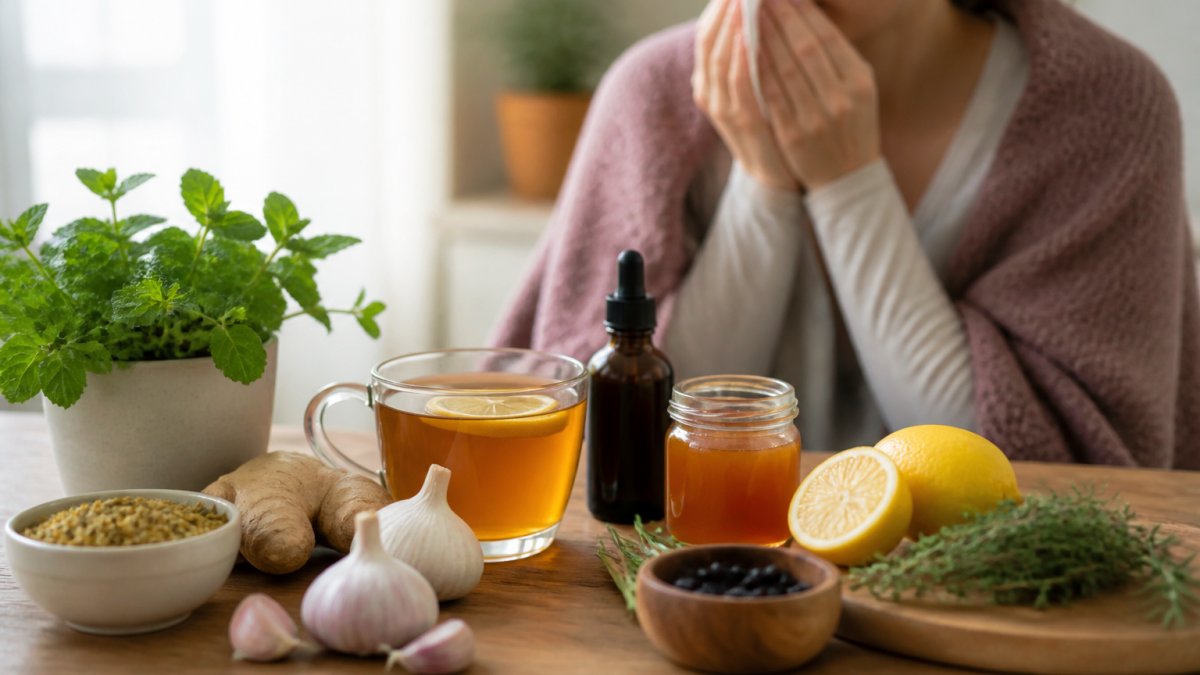
Many people are turning to natural alternatives to over the counter cold meds to avoid side effects, prefer recognizable ingredients, or support their body’s natural healing process.
Natural remedies like honey, ginger, herbal teas, and supplements are tools to manage mild cold symptoms while your body recovers, not replacements for medical care when needed.
What matters most is knowing which remedies actually help, how to use them safely, and when to seek professional guidance.
Honey for Cold Cough: Evidence and Best Practices
How Honey Works for Throat Irritation
Honey coats the throat lining and reduces cough triggers, easing throat pain within minutes. Dark, raw honey contains more beneficial compounds than lighter, pasteurized varieties.
Safe Dosage and Preparation
For adults, take one to two teaspoons every few hours as needed. Never give honey to children under one year old due to botulism risk (the CDC). Honey mixed with warm lemon water and ginger creates a soothing remedy combining warmth, vitamin C, and anti-inflammatory benefits. Store in a cool, dark place indefinitely.
Saline Nasal Rinse for Congestion Relief
How Saline Rinses Clear Nasal Passages
A saline nasal rinse clears mucus and reduces inflammation by flushing out bacteria and irritants. The salt solution matches your body’s natural balance, preventing irritation. Use multiple times daily with no side effects or dependency risk.
Using a Neti Pot or Saline Spray Correctly
Fill a neti pot with lukewarm saline solution (one-quarter teaspoon salt in eight ounces of distilled or boiled water), tilt your head over a sink, and let the solution flow from one nostril to the other. Saline sprays offer a simpler alternative for beginners. Always use distilled or boiled water, never tap water.
What to Take Instead of Cold Medicine: Herbal and Supplement Options
Zinc Lozenges: Timing and Realistic Expectations
Zinc lozenges may reduce cold duration by one to two days if taken within 24 hours of symptom onset; effectiveness drops sharply after 48 hours. Take one lozenge (13-25 mg) every two to three hours for three to five days, not exceeding 40 mg daily. Zinc soothes throat irritation but doesn’t clear congestion or reduce fever. Avoid if taking fluoroquinolone or tetracycline antibiotics, or if you have copper deficiency.
Elderberry: Evidence Grade and Dosing
Elderberry may reduce cold duration by one to two days if started within 24-48 hours; evidence is mixed. Standard dosing is one tablespoon of syrup or one lozenge three times daily. Generally safe for adults and children; pregnant women should consult a doctor. Use only prepared syrups, lozenges, or teas, never uncooked berries.
Echinacea: Limited Evidence and Realistic Use
Echinacea has weak evidence for shortening colds; it’s better viewed as a throat-soothing herb. Typical dosing is 300-500 mg three times daily or one cup of tea three times daily. Avoid if pregnant, have autoimmune conditions, or are allergic to ragweed, chrysanthemums, or daisies.
Ginger: Anti-Inflammatory Benefits and Preparation
Ginger has documented anti-inflammatory properties (pubmed.ncbi.nlm.nih.gov). Steep one to two inches of fresh ginger in eight ounces of hot water for five to ten minutes; drink three to four cups daily. Dried powder (one-quarter to one-half teaspoon per cup) works if fresh is unavailable. Ginger reduces inflammation and eases body aches but doesn’t shorten cold duration. Safe for most adults and children; pregnant women can use culinary amounts. High-dose supplements may increase bleeding risk on blood thinners.
Vitamin C: Realistic Expectations
Vitamin C doesn’t prevent colds but may reduce symptom severity slightly if taken regularly before illness. Eat vitamin C-rich foods (citrus, berries, peppers, leafy greens) or take 500-1000 mg daily; avoid exceeding 2000 mg daily. Use as a preventive during cold season, not as treatment once symptoms appear.
Warm Liquids: Hydration and Comfort
Warm liquids soothe throat irritation, ease congestion, and support hydration. Chicken broth provides electrolytes; herbal teas (chamomile, thyme, licorice root) offer soothing compounds; warm water with honey and lemon is simple and effective. Drink at least eight to ten glasses of water daily during a cold.
Start remedies within the first 24 hours of symptom onset. Zinc, elderberry, and echinacea lose effectiveness after 48 hours. Honey, saline, ginger, and hydration work at any stage but provide symptom relief rather than duration reduction.
Safe Use of Supplements When Sick: Interactions and Precautions
Age, Pregnancy, and Health Conditions
Age, pregnancy, and health conditions affect remedy safety. Children under five need different dosing; check package labels. Pregnant women should avoid echinacea, elderberry, and high-dose vitamin C without approval; honey and small amounts of ginger are safe. Those with autoimmune conditions should avoid immune-stimulating herbs like echinacea. People on blood thinners should avoid high-dose garlic and ginger supplements.
Combining Remedies Safely
Start with one remedy at a time to avoid interactions. Honey and saline rinses combine safely. Don’t mix zinc lozenges with other zinc supplements. Herbal teas combine freely. Always mention supplements to your doctor if taking prescription medications.
| Remedy | Safe for Children | Safe in Pregnancy | Potential Interactions |
|---|---|---|---|
| Honey | Yes (over 1 year) | Yes | None known |
| Saline rinse | Yes | Yes | None |
| Zinc lozenges | Yes (check dosing) | Consult doctor | May interact with antibiotics |
| Elderberry | Yes (check dosing) | Consult doctor | Possible immune interactions |
| Echinacea | Yes (check dosing) | Avoid | Immune-stimulating |
| Ginger | Yes (small amounts) | Small amounts OK | May thin blood |
Start remedies early in your cold. Natural alternatives work best within the first 24-48 hours of symptom onset. Waiting until day four or five reduces their effectiveness significantly.
Symptom-Based Guide: Which Natural Remedy Works Best
Not all remedies work equally well for every symptom. This guide maps specific symptoms to the most effective natural alternatives, ranked by evidence strength and speed of relief.
For Sore Throat and Cough: Evidence-Ranked Options
First choice: Honey (fastest relief, strongest evidence)
Honey coats the throat and reduces cough triggers, providing relief within five to ten minutes. Adults: one to two teaspoons every few hours, up to four times daily. Children over one year: one-half to one teaspoon, same frequency.
Second choice: Ginger tea (anti-inflammatory, reduces body aches with sore throat)
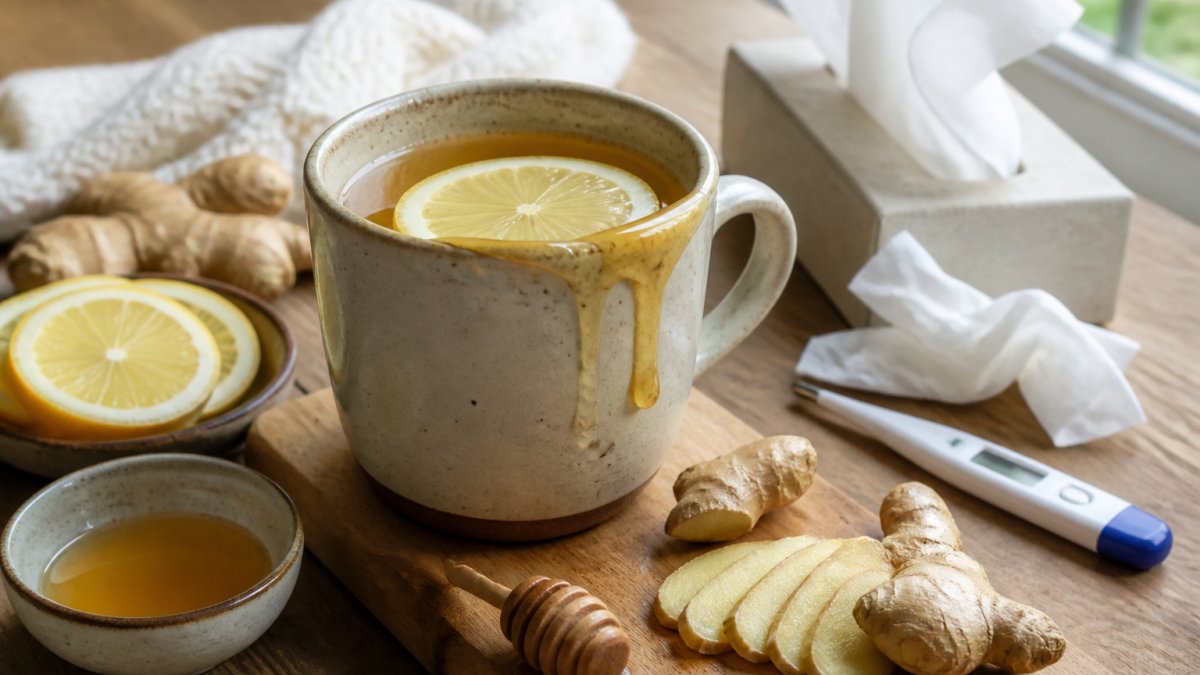
Ginger reduces inflammation and eases body aches, taking 15-20 minutes to work. Steep one to two inches of fresh ginger slices in eight ounces of hot water for five to ten minutes; add honey and lemon.
Third choice: Herbal throat teas (soothing, mild evidence)
Chamomile, thyme, licorice root, and slippery elm soothe throat tissue in 20-30 minutes.
What NOT to do: Avoid cold beverages; they irritate an inflamed throat. Skip menthol lozenges if you have asthma, as they can trigger airway constriction.
For Nasal Congestion and Runny Nose: Ranked by Speed and Effectiveness
First choice: Saline nasal rinse (fastest, no side effects)
Saline rinses clear congestion within five minutes by flushing mucus and irritants. Use a neti pot filled with lukewarm saline (one-quarter teaspoon salt in eight ounces of distilled water), tilting your head over a sink and letting solution flow from one nostril to the other. Saline sprays are easier for beginners. Use three to four times daily.
Second choice: Steam inhalation (opens passages, 10-15 minute relief)
Boil water, drape a towel over your head, and breathe deeply for five to ten minutes; repeat three to four times daily. Add eucalyptus oil (three to five drops) for enhanced effect. Relief lasts 10-15 minutes and is gentler than saline for sensitive tissue.
Third choice: Humidifier (overnight relief, sustained effect)
Run a cool-mist or warm-mist humidifier for six to eight hours nightly. Elevate your head with two to three extra pillows to aid drainage and ease breathing.
What NOT to do: Avoid decongestant nasal sprays (oxymetazoline, phenylephrine) for more than three days; they cause rebound congestion. Saline has no such risk and can be used indefinitely.
For Fever and Body Aches: Rest-First Approach
Primary tool: Rest (most important)
Aim for eight to ten hours nightly during a cold. Rest is more effective than any remedy for reducing fever and body aches.
Secondary: Hydration (essential for fever management)
Drink water, herbal tea, warm broth, and electrolyte beverages; aim for at least eight to ten glasses daily. Dehydration prolongs fever and worsens body aches.
Tertiary: Anti-inflammatory herbs (ginger, turmeric)
Ginger tea or turmeric (one-quarter to one-half teaspoon in warm milk or tea) reduce inflammation and ease body aches over 20-30 minutes.
Clothing and environment: Wear light clothing and use a single blanket; overheating prolongs fever.
Fever facts: Fevers below 102°F (38.9°C) help fight infection and don’t need lowering. Fevers above 103°F (39.4°C) require medical attention.
Seek immediate medical attention if fever exceeds 103°F (39.4°C), is accompanied by severe headache, stiff neck, confusion, or difficulty breathing, or lasts more than five days. These signs suggest a more serious infection.
Quick Decision Matrix: Symptom → Remedy
| Symptom | First Choice | Timing | Frequency | Evidence Grade |
|---|---|---|---|---|
| Sore throat | Honey | 5-10 min relief | Every 2-4 hours | Strong |
| Cough | Honey | 5-10 min relief | Every 2-4 hours | Strong |
| Throat + body ache | Ginger tea | 15-20 min relief | 3-4 times daily | Moderate |
| Nasal congestion | Saline rinse | 5 min relief | 3-4 times daily | Strong |
| Congestion at night | Humidifier + elevation | 30-60 min relief | Overnight | Moderate |
| Fever | Rest + hydration | Gradual over hours | Continuous | Strong |
| Body aches | Ginger or turmeric tea | 20-30 min relief | 3-4 times daily | Moderate |
Combine remedies strategically: honey + ginger for sore throat and body aches; saline + humidifier for congestion; rest + hydration for fever. Start with the remedy that addresses your worst symptom, then add others only if the first doesn’t suffice.
Red Flags: When Home Care Is Not Enough
Natural alternatives to over the counter cold meds work for mild colds. But some symptoms signal a need for professional care.
Seek medical attention if you experience shortness of breath, severe chest pain, or confusion. These suggest complications beyond a common cold.
A fever lasting more than five days, even at lower temperatures, warrants a doctor visit. Persistent fever may indicate a secondary infection like pneumonia.
Severe sinus pain or pressure, especially on one side of the face, suggests a sinus infection. This often needs antibiotics.
Cough lasting more than two weeks requires evaluation. Lingering cough can signal bronchitis or other respiratory issues.
If symptoms worsen after improving, or if you develop new symptoms, contact your healthcare provider.
Managing a cold with natural alternatives to over the counter cold meds puts you in control of your recovery. At Allstarhealth, we offer a curated selection of natural and organic food products, including pantry staples and superfoods, that support a holistic lifestyle.
Frequently Asked Questions
What’s the best natural alternative to over-the-counter cold medicine?
The best natural alternative depends on your specific symptoms. Honey works well for sore throats and coughs, saline rinses clear nasal congestion, and zinc lozenges may shorten cold duration if taken early. Warm liquids, rest, and hydration support recovery across all cold symptoms. Combining multiple remedies often works better than relying on a single option. Choose based on which symptoms bother you most.
Can honey really help soothe a cough from a cold?
Yes. Honey coats the throat and reduces irritation that triggers coughing. For adults and children over 1 year old, a spoonful of honey can provide relief comparable to some cough suppressants. Raw honey may offer additional antimicrobial properties. Take honey straight or mix it into warm tea. Avoid giving honey to infants under 12 months due to botulism risk.
Do saline rinses actually help relieve nasal congestion?
Saline rinses are effective for clearing mucus and reducing congestion. They work by flushing out irritants and helping nasal passages drain. Use a neti pot or saline spray 2-3 times daily during a cold. Rinse with sterile or boiled water to avoid infection. Most people notice relief within minutes and can repeat as needed without side effects.
Is it safe to use multiple natural remedies together when I’m sick?
Most common natural remedies are safe to combine, but check for interactions if you take medications or have health conditions. Avoid excessive zinc (over 40mg daily) or combining multiple supplements with similar effects. Pregnant women, young children, and people with chronic conditions should consult a healthcare provider before starting supplements. Start with one remedy and add others if needed rather than using everything at once.