Last Updated: October 26, 2026
Quick Summary
Whether organic food worth price depends on your priorities. Organic reliably reduces pesticide exposure, but it’s not proven to deliver large direct health benefits over a well-rounded conventional diet. Buy organic selectively for high-residue items like berries and leafy greens if budget matters.
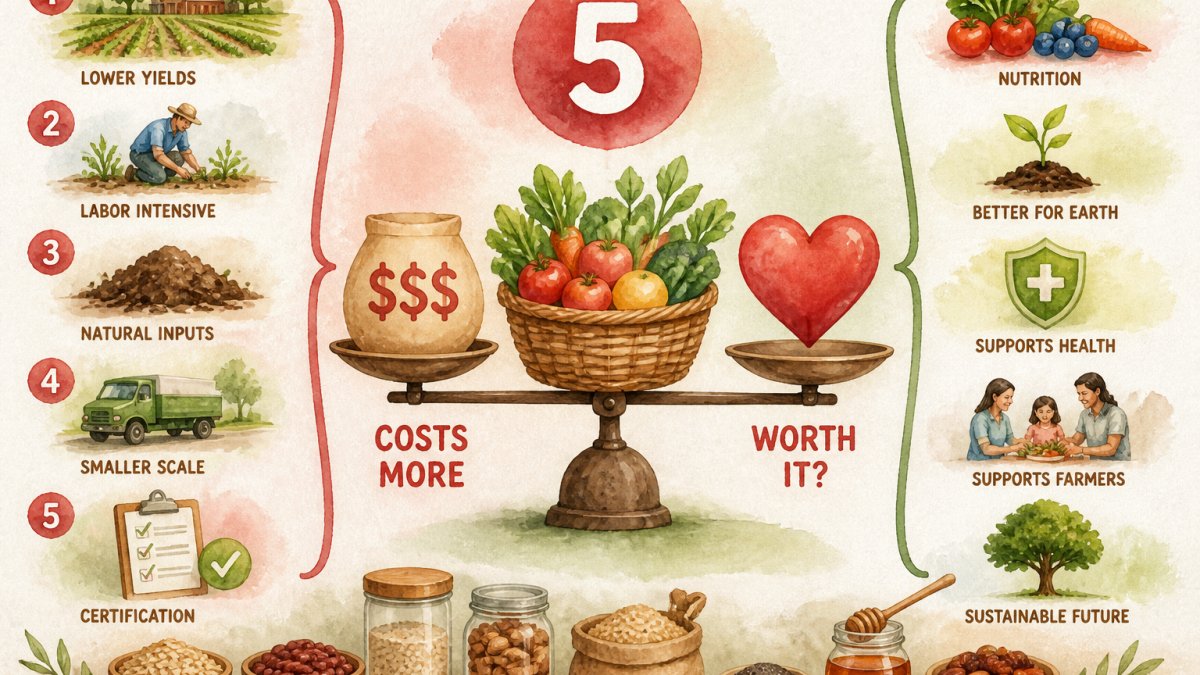
- Organic farming requires more labor, produces lower yields per acre, and involves certification costs that raise prices.
- Organic produce carries fewer detectable pesticide residues, but residue differences don’t translate to proven long-term health outcomes for most adults.
- Strawberries, spinach, apples, grapes, peaches, and fresh herbs absorb more pesticide residues and are smart choices for organic buying.
- Thick-skinned produce like avocados, bananas, and oranges accumulate fewer residues on edible flesh, making conventional versions reasonable budget choices.
- Most households find two or three targeted organic swaps, usually berries, leafy greens, and one dairy item, capture perceived benefits for a fraction of an all-organic basket.
Table of Contents
- What Is Organic Food and Why Does It Cost More?
- Is Organic Food Healthier Than Conventional Options?
- Foods Worth Buying Organic
- Foods Not Worth Buying Organic
- How to Choose Organic Food on a Budget
- The Real Health and Environmental Trade-Offs
- Frequently Asked Questions
What Is Organic Food and Why Does It Cost More?
Organic food is grown without synthetic pesticides, fertilizers, or genetically modified organisms. At Allstarhealth, we understand that choosing between organic and conventional produce often comes down to one question: is organic food worth price considerations? The answer depends on your budget, health priorities, and which foods you’re buying.
The price difference is real, but the reasons go deeper than marketing. Understanding these costs helps you make smarter choices about where to spend your grocery dollars.
The Production Difference
Growing organic crops requires different farming methods than conventional agriculture. Farmers skip synthetic fertilizers and instead build soil health through composting, crop rotation, and natural amendments.
Organic farmers also manage pests without chemical sprays, using physical barriers, beneficial insects, and targeted interventions.
Yields also matter. Organic farms typically produce less per acre, so spreading costs across fewer bushels or pounds raises the per-unit cost, a trade-off many farmers accept for soil health and environmental reasons.
Certification and Labor Costs
Becoming certified organic is expensive. Farmers must document practices, submit to inspections, and maintain detailed records, and certification bodies charge fees.
Labor costs are higher too, since organic operations employ more people per acre for manual weeding, monitoring, and pest management.
Transportation and storage add another layer. Organic produce often travels shorter distances because fewer farms grow it, and regional supply chains are less efficient than massive conventional networks.
Is Organic Food Healthier Than Conventional Options?
The honest answer is more nuanced than either side admits. The useful approach is to separate what research consistently shows from what remains uncertain, and to remember that “healthier” can mean several different things.
What the Evidence Fairly Consistently Shows
On basic nutrition, vitamins, minerals, and macronutrients, organic and conventional produce are broadly comparable. Compare organic and conventional honey options to understand how processing and sourcing affect nutritional and purity differences.
The more consistent finding is about pesticide residues. Conventional produce is more likely to carry detectable residues of synthetic pesticides; organic produce, by definition, is grown without them. That difference is real and measurable.
Where the Evidence Is Limited or Mixed
Claims that organic food prevents cancer, improves fertility, or boosts immunity are not well supported by strong human trials. Most studies are observational and cannot separate eating organic from habits that travel with it, higher income, more education, better diet quality, more physical activity, a classic confounding problem that warrants caution with headlines.
The pattern in the research: the strongest, most repeatable signal is reduced dietary pesticide exposure; the weakest is any direct long-term health benefit attributable to the organic label itself.
Pesticide Residues and Chemical Exposure
Conventional farming uses regulated synthetic pesticides with residue limits intended to be safe. Organic farming prohibits synthetic pesticides but permits certain natural ones, and “natural” is not automatically safer; some naturally derived compounds are quite toxic. The label governs which inputs are allowed, not zero risk.
Washing produce reduces residue levels meaningfully, organic or not. For most adults, approved residue levels are considered low risk; the concern is more relevant for young children, pregnant women, and people with specific sensitivities, which is why many households prioritize organic for a few high-residue items rather than everything.
The defensible summary: organic food reliably reduces pesticide exposure, but it is not proven to deliver large, direct health benefits over a well-rounded conventional diet. If reducing exposure is your priority, buy organic selectively. If overall nutrition is your priority, eating more fruits and vegetables matters far more than the label on them.
Nutritional Content Comparison
Research summarized by Mayo Clinic’s nutrition guide supports the view that organic and conventional produce are nutritionally similar on the fundamentals. Where the conversation gets more interesting is not raw vitamin content but what else is, or isn’t, on the food, and how your body handles it over years of eating.
The practical upshot: don’t buy organic expecting a vitamin boost. Buy it, if you choose to, to reduce synthetic pesticide exposure or because you value the production methods behind the label.
Foods Worth Buying Organic
Some produce absorbs more pesticide residue during growth. Strawberries, spinach, apples, grapes, and peaches are frequently cited as higher in residues when grown conventionally.
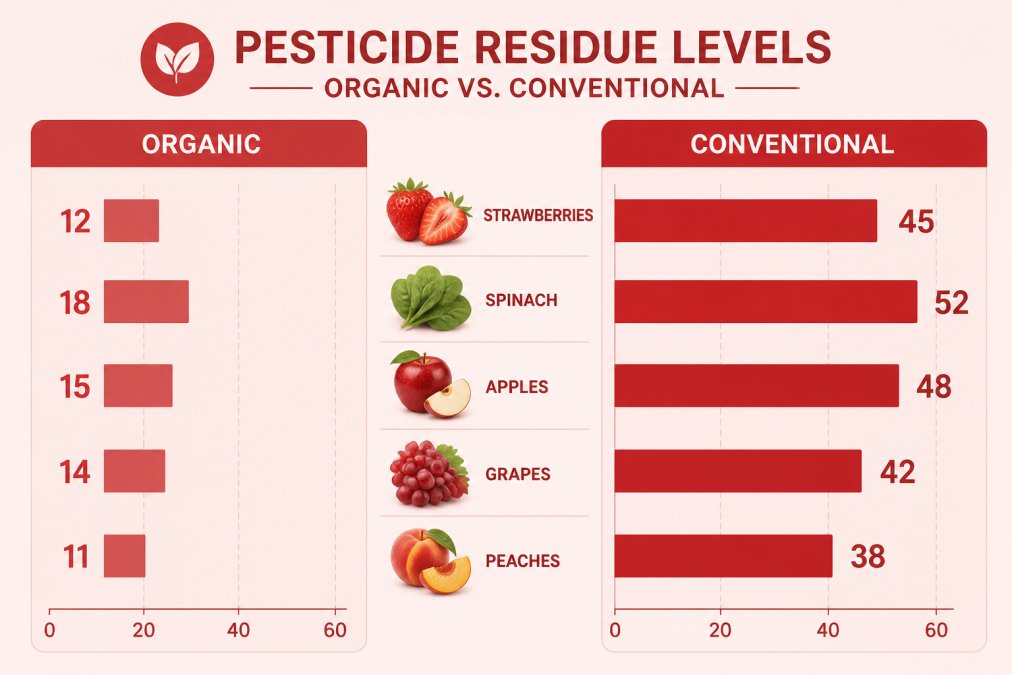
Berries are delicate and require frequent pesticide applications. Leafy greens have large surface areas that accumulate residues.
Herbs like cilantro and parsley are also worth buying organic. Discover the best herbs and spices for a healthy kitchen to add flavor while maximizing health benefits.
Organic dairy and meat come from animals raised without routine antibiotics and synthetic hormones.
Foods Not Worth Buying Organic
Conventional produce with thick skins, avocados, bananas, oranges, and melons, accumulates fewer pesticide residues on the edible flesh.
Corn and soybeans are heavily genetically modified in conventional farming. If avoiding GMOs is your priority, buy organic.
Onions and garlic are naturally resistant to many pests, so conventional versions carry lower residue levels than berries or leafy greens, safe bets for conventional shopping.
Frozen vegetables are a smart choice regardless of organic status.
How to Choose Organic Food on a Budget
Buying organic doesn’t require choosing it for everything. Spend your organic budget where it buys the most of what you care about, lower pesticide exposure, environmental values, or animal welfare. Here’s a practical framework, plus household math that makes the trade-offs concrete.
A Decision Framework by Priority
Start by naming your top priority, because it changes what you should buy organic.
- If reducing pesticide exposure is your priority: buy organic for the items you eat most often and that tend to carry the highest conventional residues, berries, leafy greens, apples, grapes, peaches, and fresh herbs. Skip organic for thick-skinned produce where the peel protects the flesh.
- If environmental values are your priority: organic farming builds soil and supports biodiversity, but lower yields mean more land per unit of food. Weigh that trade-off honestly; buying local and seasonal, and wasting less food, often does more for the planet than any single label.
- If animal welfare is your priority: organic dairy, eggs, and meat come from animals raised under standards that restrict routine antibiotics and require outdoor access. If you eat these regularly, that is where your organic dollars do the most work.
- If budget is your priority: buy conventional for most items and treat organic as a selective upgrade. A well-rounded conventional diet rich in produce beats a sparse organic one every time.
Translating Premiums into Household Math
You don’t need exact prices to make this concrete. Look at the percentage premium on the items you actually buy and multiply it by how often you buy them.
A simple method: pick your five most-purchased produce items, note the organic-versus-conventional premium on each (many stores display both), and estimate monthly purchases. Items you buy weekly with a modest premium often cost more over a year than an occasional splurge with a big premium, frequency matters more than sticker shock on any single item.
Compare the premium on the items you buy most, not the ones with the scariest headlines. A small premium on a weekly staple usually outweighs a large premium on a once-a-month purchase.
Buy Seasonal and Local When Possible
Seasonal produce costs less because it doesn’t require long-distance transport or extended storage. Farmers markets often have organic options at lower prices than supermarkets because the middleman markup is smaller, and in-season food tastes better and fresher. An organic apple from this month’s harvest beats a conventional one that’s been in cold storage for months, on taste and often on value.
Check for Organic Certification Labels
The USDA organic seal means the product meets federal standards for how it was grown and processed. Some farmers use organic methods without certification because certification carries costs they’d rather put into the farm; buying directly from them at markets can be a good value, though you’re relying on their word rather than third-party verification.
Food Access and Equity
Organic food is not equally available or affordable everywhere. In some neighborhoods, the nearest store with a real organic selection is a long trip away, and the premium is higher than in wealthier areas. If that’s your situation, know that a healthy diet does not require organic food.
Learn how to choose quality organic foods with practical tips on labels, certifications, and freshness indicators that help you identify the best values.
The Real Health and Environmental Trade-Offs
Choosing organic involves trade-offs. Understanding them helps you decide what matters most to your household.
Food Safety Considerations
Organic farming doesn’t eliminate all food safety risks. Organic produce can still carry bacteria like E. coli or Salmonella if contaminated water or poor handling is involved.
Conventional farming has its own considerations: synthetic pesticides are tested at approved residue levels, but the regulatory system isn’t perfect.
Washing produce thoroughly matters regardless of whether it’s organic or conventional. This single step reduces bacteria and residues more effectively than any label.
Environmental and Soil Health Impact
Organic farming builds soil over time through crop rotation and composting. Conventional farming, especially monoculture with heavy chemical inputs, can degrade soil health.
Organic farming uses less energy per acre in some cases because it skips energy-intensive synthetic fertilizer manufacturing.
The trade-off is real: organic farming is better for soil and biodiversity but requires more land.
Building a healthier pantry starts with understanding your priorities.
At Allstarhealth, we help you stock a pantry aligned with your values and budget. Our curated selection of natural and organic food products, from premium grains to wholesome superfoods, makes it easier to build a nutritious food supply without guesswork.
| Food Category | Organic Worth It? | Why | Budget Alternative |
|---|---|---|---|
| Strawberries, Spinach, Apples | Yes | High pesticide residues conventionally | Buy conventional thick-skinned produce |
| Bananas, Avocados, Oranges | No | Thick skins protect flesh | Always conventional |
| Leafy Greens | Yes | Large surface area absorbs residues | Frozen conventional vegetables |
| Grains, Beans | Maybe | GMO concern in conventional corn/soy | Buy conventional if GMOs don’t concern you |
| Herbs (cilantro, parsley) | Yes | Consumed whole, high residues | Use frozen herbs |
Frequently Asked Questions
Is it worth paying extra for organic food?
Whether organic food is worth the price depends on your budget and priorities. Research shows organic produce typically costs more due to stricter farming practices and certification requirements. If you’re concerned about pesticide exposure, buying organic for high-residue produce like strawberries and spinach offers real benefits. For budget-conscious shoppers, conventional produce that’s been washed thoroughly remains a healthy choice. The key is deciding which foods matter most to your household.
Is organic food more nutritious than conventional food?
Studies show minimal nutritional differences between organic and conventional produce in terms of vitamins and minerals. Both provide essential nutrients when eaten regularly. The main distinction lies in pesticide residues: organic produce typically has lower synthetic pesticide levels, which some prioritize for health reasons. However, eating any fresh produce, organic or conventional, offers greater health benefits than not eating produce at all. Your overall diet quality matters more than whether individual items are certified organic.
Which foods are not worth buying organic?
Foods with thick, inedible skins like conventional bananas, avocados, and oranges have minimal pesticide residue on the part you eat, making organic versions less critical. Conventionally grown corn and peas also tend to have lower pesticide residues. Onions, cabbage, and frozen broccoli similarly show low residue levels. Buying conventional versions of these foods allows you to allocate your organic budget to higher-pesticide-risk produce, making your spending more strategic and cost-effective.
How can I choose organic food on a budget?
Focus your organic purchases on produce with higher pesticide residues: strawberries, spinach, apples, grapes, and peaches. Buy seasonal organic produce when prices drop. Compare bulk options and consider frozen organic vegetables, which cost less than fresh while retaining nutrients. Check certification labels to ensure you’re getting genuine organic products.