
Last Updated: November 3, 2026
Quick Summary
Yes, you can freeze organic dry beans. Freezing slows pest activity and moisture changes, and it kills any insects or eggs already inside the bag, which makes it a useful step for bulk purchases. Freezing does not improve nutrition, so it is a storage measure, not a requirement.
- Inspect beans for webbing, live insects, or holes before freezing.
- Portion beans into meal-sized amounts so you thaw only what you will cook.
- Flash-freeze on a sheet pan for one to two hours to keep beans loose and scoopable.
- Keep the freezer at 0°F (-18°C) or below for best results.
- Frozen dry beans keep their quality for about six months when packaged well.
Table of Contents
- What Freezing Does to Organic Dry Beans
- Step-by-Step: How to Freeze Organic Dry Beans
- How Long Can You Freeze Organic Dry Beans?
- Freezing Dried Beans to Kill Bugs
- Can You Freeze Organic Dry Beans in a Jar?
- How to Store Dry Beans Long Term
- Your Next Step: Stocking a Freezer-Ready Bean Supply
- Frequently Asked Questions
Can you freeze organic dry beans? Yes, you can, and for many home cooks it is a practical way to protect a bulk purchase from pests and staleness. Here is what it does, what it does not do, and how to do it well.
“Gracious words are a honeycomb, sweet to the soul and healing to the bones” (Proverbs 16:24). Good stewardship of food works the same way: careful preparation brings sweetness and nourishment to the table.
What Freezing Does to Organic Dry Beans
Freezing can slow the things that spoil dry beans over time, such as pest activity and moisture changes.
Freezing does not make beans safer to eat in any new way, and it does not improve their nutrition. Its main job is storage protection. Beans that are already dry, clean, and free of pests store well at room temperature in airtight containers, so freezing is an extra step, not a requirement.
Step-by-Step: How to Freeze Organic Dry Beans
Here is the process we recommend. It works the same for organic and conventional dry beans, organic certification does not change how freezing affects the beans, because the cold does not interact with certification. What organic does change is your starting point: organic beans are grown without synthetic pesticides, so a clean, dry, pest-free bag is your first line of defense, and freezing is a backup, not a substitute for good storage.
Preparing and Packaging the Beans
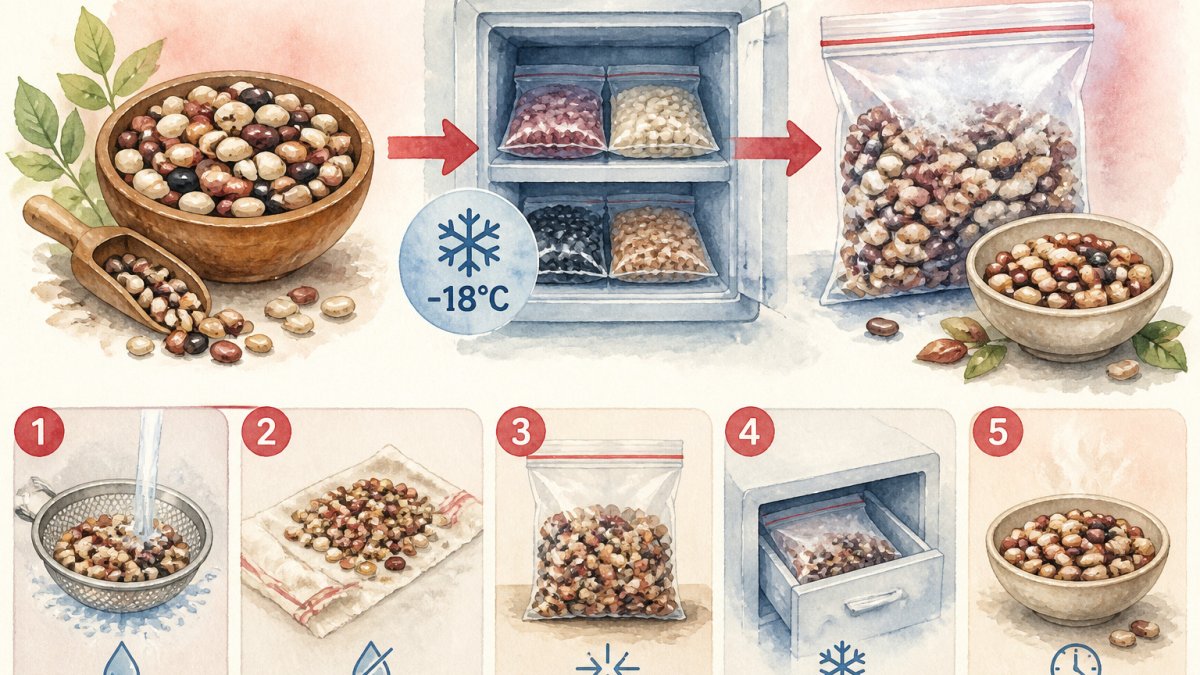
- Inspect the beans first. Spread them on a sheet pan or white towel and look for webbing, live insects, small holes in the beans, or fine dust, all signs of pantry pests. Discard badly infested portions rather than freezing them.
- Confirm the beans are fully dry. Organic dry beans should feel hard and rattle when you shake the bag. If they feel soft or cool to the touch, spread them in a single layer in a dry room for a day before packaging.
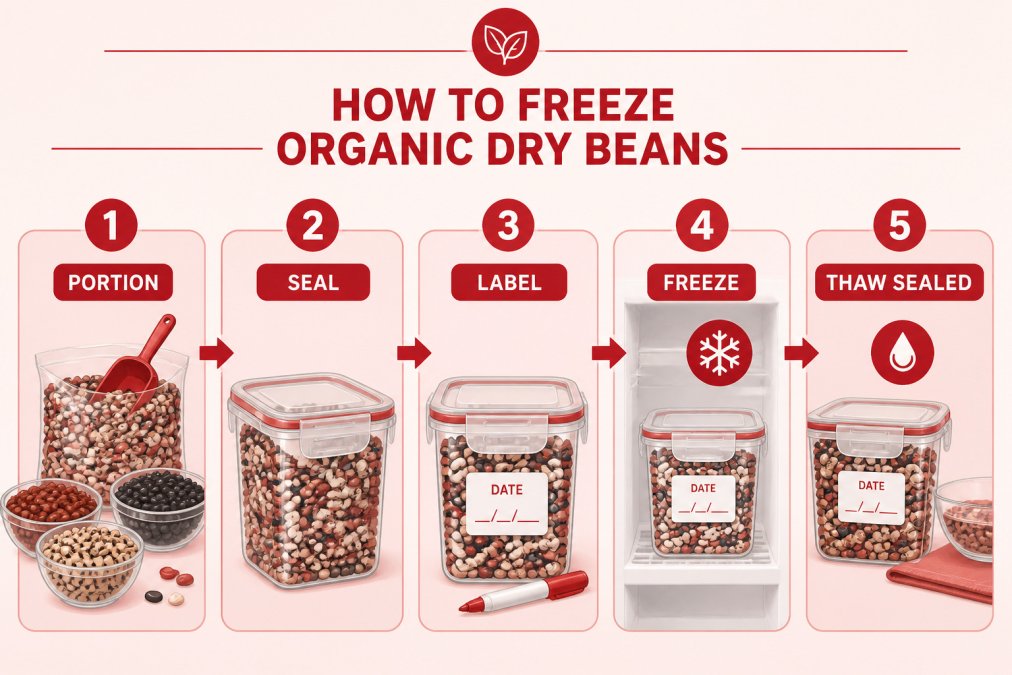
- Portion into meal-sized amounts, roughly the amount your family uses in one pot of soup or one batch of chili. This matters because you should thaw only what you will cook, and repeated freeze-thaw cycles degrade texture.
- Package in freezer-safe bags or rigid containers, pressing out as much air as possible. For bags, flatten them so beans freeze in a thin layer rather than a solid block.
- Label each package with the bean type and the freeze date. A strip of masking tape and a marker is enough.
Watch out: Do not seal beans that still feel damp or were rinsed before freezing. Trapped moisture causes freezer burn, clumping, and ice crystals that make the beans hard to separate later.
Flash-Freezing for Loose, Scoopable Beans
If you want to use beans by the cup rather than by the bag, flash-freeze them first. Spread the dry beans in a single layer on a rimmed baking sheet and freeze for one to two hours, then transfer the frozen beans to a bag or container. They will stay loose and scoopable, so you can measure out exactly what a recipe calls for without thawing the whole batch.
Freezing and Thawing Safely
Lay sealed packages flat in the freezer so they chill quickly and evenly, then stack them once solid. Keep the freezer at 0°F (-18°C) or below; a freezer that cycles above that range shortens the beans’ usable life.
To use them, move the portion to the refrigerator to thaw overnight, or add the dry beans straight to a pot of cooking water, dry beans do not need to thaw before cooking, and going straight from freezer to pot is safe. If you thaw at room temperature, keep the package sealed and cook the beans the same day.
Watch out: Freezing is a storage and pest-control measure, not a cooking step. Frozen dry beans are still raw and must be cooked before eating, just like beans from the pantry. Do not treat a trip through the freezer as a substitute for soaking or boiling.
Preventing Condensation When Beans Come Out
Condensation is the most common freezer mistake with dry beans. When you pull a cold package into a warm kitchen, moisture beads on the beans and inside the bag. Open the package only after the beans have come closer to room temperature, or pour them directly into the cooking pot while still cold. If you see damp beans after opening, use them right away rather than returning them to storage.
How Long Can You Freeze Organic Dry Beans?
Frozen dry beans keep their quality for several months when packaged well. Many home cooks aim to use them within about six months, since texture and flavor slowly decline after that. Check your packages regularly and use the oldest first.
Freezing Dried Beans to Kill Bugs
Freezing can stop an existing insect problem in dry beans, because the cold kills insects and their eggs. Many people use it as a first step when they find weevils or moth larvae in a bag.
Keep the beans frozen for several days before returning them to the pantry, and then store them in airtight containers to prevent a new infestation. Freezing kills bugs that are already present, but it does not stop new insects from entering a container that stays open.
The table below sums up the main storage choices covered in this guide.
| Method | Best for | Key difference |
|---|---|---|
| Freezing | Pest control and bulk buys | Kills existing insects and eggs |
| Airtight storage | Everyday rotation | No freezer space or condensation risk |
| Freeze then airtight | Long-term stock | Kills pests, then keeps beans in the pantry |
Can You Freeze Organic Dry Beans in a Jar?
Glass jars can go in the freezer, but they need care. Leave headspace for expansion, use only jars rated for freezing, and avoid sudden temperature changes, which can crack glass. Freezer bags or rigid plastic containers are usually easier and safer for dry beans.
How to Store Dry Beans Long Term
For storage without the freezer, keep dry beans in airtight containers in a cool, dry, dark spot. For guidance on keeping dried herbs potent over the long term, see how to store dried medicinal herbs for long-term potency. Moisture, heat, and light are the main enemies. Glass jars with tight lids, food-grade buckets with gasketed lids, and heavy-duty Mylar bags inside rigid containers all work well. Add a note with the purchase date so you rotate oldest-first.
Freezing vs. Airtight Storage: Which Should You Choose?
Most guides treat freezing and pantry storage as separate topics. In practice they are two tools for the same job, and the right choice depends on your situation:
- Freezing is best for pest control and bulk buys. If you bring home a large bag of organic dry beans and want to stop any eggs or larvae already inside from hatching, a few days in the freezer is the most reliable step. It is also useful if your pantry runs warm or humid.
- Airtight storage is best for everyday rotation. Beans you will cook within a few months keep perfectly in a sealed jar or bucket, and you avoid the freezer space and the condensation risk.
- Combine them for long-term stock. Freeze a new bulk purchase for several days to kill pests, then move the beans to airtight containers for pantry storage.
Organic Pest-Control Alternatives and Prevention
Home storage discipline matters for dry beans whatever their growing method. Practical prevention steps:
- Buy from suppliers with fast turnover, so beans have not sat in a warehouse long enough to pick up pests.
- Freeze new bulk purchases for several days before transferring to pantry containers.
- Keep containers sealed between uses; an open bag is an invitation.
- Store beans away from flour, rice, and other grains, which share the same pantry pests.
- Inspect containers monthly and discard any portion showing webbing or live insects.
How Long Do Dry Beans Last?
Stored cool, dry, and sealed, dry beans keep their cooking quality for a year or more, and they remain safe to eat well beyond that, though they gradually become harder to soften. Frozen dry beans hold quality for about six months before texture and flavor decline. In both cases, older beans are not spoiled; they simply need longer cooking and may benefit from a longer soak.
Watch out: If beans stay hard after a long soak and a long simmer, the cause is usually age, poor storage, or hard water, not the freezer. Very old beans and beans cooked in mineral-heavy water can resist softening no matter how long they cook. Test a small batch before committing a whole pot.
Your Next Step: Stocking a Freezer-Ready Bean Supply
Start small. Buy a manageable amount of organic dry beans, portion and label them, and decide which storage method fits your kitchen best. Once you have a routine, you can buy in larger quantities with confidence.
If you are building a healthy pantry, Allstarhealth offers organic staples and wellness resources to help you plan. Pricing depends on quantity, dates, and delivery, so check our website for current prices or a quote.
Frequently Asked Questions
Can I freeze uncooked dry beans?
Yes. Uncooked organic dry beans can be frozen in airtight, freezer-safe containers or freezer bags. Freezing mainly helps when you want to slow pest activity or keep beans in a stable, cold environment for long storage. Remove as much air as possible, label each container with the date, and keep it sealed until you need it. Thaw sealed containers at room temperature so condensation does not reach the beans, then store them in a dry place once opened.
How long can you freeze organic dry beans?
Organic dry beans kept sealed in the freezer generally stay in good condition for several months, and many storage guides suggest using them within about six months for best quality. Freezing does not make beans last indefinitely. Quality, texture and cooking time can change over longer periods, so write the freezing date on each container and rotate older bags to the front.
Does freezing dry beans kill bugs?
Freezing can reduce pantry pests in dry beans, but it works best when beans are sealed and held at a steady cold temperature. Beans already infested with larvae or eggs may need more than one approach. Inspect beans before storing them, discard any with holes or webbing, and keep storage areas clean to prevent new infestations.
Can you freeze soaked beans?
Soaked beans are a different case from dry beans. Once soaked, beans begin to absorb water and are no longer shelf-stable, so they should be cooked or frozen promptly after soaking. If you freeze cooked or soaked beans, cool them quickly, portion them into freezer-safe containers with some of the cooking liquid, and use them within a few months for the best flavor and texture.