Last Updated: November 4, 2026
Quick Summary
Superfoods energy focus benefits come from steady nutrition rather than quick fixes. Foods rich in protein, fiber, healthy fats, and micronutrients help sustain energy across the day, and omega-3 foods like salmon, sardines, and walnuts are among the most studied for brain health. The most useful choices are often simple staples already in your kitchen.
- Superfood is a marketing term, not a scientific classification with a regulated definition.
- A half-cup of cooked lentils adds roughly 9 grams of protein and 8 grams of fiber.
- Pair carbohydrate snacks with protein or fat to avoid sharp energy crashes.
- Keep caffeine earlier in the day to protect sleep and next-morning energy.
- Persistent or severe fatigue deserves medical evaluation rather than a dietary change alone.
Table of Contents
- What Are Superfoods, and Is the Term Scientific?
- How Nutrients in Superfoods May Support Energy Levels
- Foods for Focus and Concentration
- Top 10 Energy Foods to Add to Your Pantry
- Foods That Fight Fatigue and What Else Causes It
- How to Add Superfoods to Your Diet
- Start Building Your Energy-Focused Pantry at Allstarhealth
- Frequently Asked Questions
Superfoods have become a staple of wellness conversations, but the real question for most people is simpler: can what you eat change how you feel during the afternoon slump or the long meeting, and do superfoods energy focus claims hold up? This guide answers that question honestly. The short version is that food can support energy and focus, but it works through steady nutrition rather than quick fixes, and the most useful foods are often the simplest ones already in your kitchen.
What Are Superfoods, and Is the Term Scientific?
“Superfood” is a marketing term rather than a scientific classification. No regulator or nutrition body defines it, and no single food does everything its label suggests.
What the term usually points to is nutrient density: foods that deliver a lot of vitamins, minerals, fiber, protein, and beneficial fats for relatively few calories. Leafy greens, berries, nuts, seeds, oily fish, and legumes all fit that description. When you see a food promoted as a superfood, the useful question is what nutrients it actually contributes to your overall diet.
Healthy eating patterns, not individual ingredients, are what the research most consistently connects with sustained energy and mental performance, which is why the superfoods energy focus idea works best as part of a balanced diet.
How Nutrients in Superfoods May Support Energy Levels
Energy from food comes from a few main sources: carbohydrates, which the body converts to glucose, along with protein and fat, which slow digestion and help blood sugar stay steadier. Micronutrients like iron, magnesium, and B vitamins play supporting roles in how cells produce and use that energy.
It helps to separate two very different kinds of claims. The roles of iron in carrying oxygen, of B vitamins in converting food into usable energy, and of magnesium in muscle and nerve function are well established in nutrition science. Claims that a specific “superfood” will noticeably boost your energy or sharpen your focus are much less certain. The reliable effect generally comes from the overall pattern of eating, adequate protein, fiber, healthy fats, and micronutrients across the day, rather than from any single ingredient.
A food rich in fiber and protein tends to digest more slowly than a refined snack, which can mean a more gradual rise and fall in energy. That is a practical benefit, though it does not mean any single food will “boost” you on demand.
Protein, Healthy Fats, and Fiber for Sustained Energy
Protein and fat extend satiety, and fiber slows the absorption of carbohydrates. Together they are the foundation of most energy-sustaining meals. Eggs, Greek yogurt, lentils, salmon, avocado, chia seeds, and oats combine these macronutrients in ways that keep you full longer than a plain sugary breakfast would.
Concrete serving examples make this easier to apply. A half-cup of cooked lentils adds roughly 9 grams of protein and 8 grams of fiber. One large egg supplies about 6 grams of protein. A one-ounce handful of walnuts contributes protein, fiber, and omega-3 fats. A half-cup of cooked oats offers soluble fiber that slows digestion. None of these is a magic bullet, but together they show how ordinary portions add up.
A common mistake is loading up on “energy” products that are mostly refined sugar with a few added ingredients. Check the label for fiber and protein content before assuming a food will keep you going.
Practical Meal and Snack Combinations
Readers often ask what to actually eat, so here are ready-to-use combinations that pair protein, fiber, and fat:
- Breakfast: plain Greek yogurt with berries and a spoonful of chia seeds; or oatmeal with walnuts and sliced banana.
- Work break: apple slices with almond butter; or a small handful of almonds with a piece of cheese.
- Pre-exercise: a banana with a tablespoon of peanut butter, or a small bowl of oats about an hour before activity.
- Post-exercise: eggs with whole-grain toast, or a lentil bowl with olive oil and vegetables.
- Afternoon slump: hummus with carrot and cucumber sticks, or a boiled egg with a few whole-grain crackers.
Watch out: a snack that is only carbohydrate, a pastry, a candy bar, or a sweetened drink, tends to produce a quick lift followed by a dip, which is why pairing it with protein or fat feels more even.
Affordable and Allergen-Friendly Alternatives
Useful nutrient-dense choices need not be expensive or restricted to one diet. Frozen berries and vegetables are as nutritious as fresh and often cheaper. Dried beans cost far less than canned or specialty alternatives. For common allergens, substitutions work well: swap walnuts for pumpkin seeds, dairy yogurt for fortified soy or coconut yogurt, eggs for tofu scramble, and salmon for canned sardines or hemp seeds. People with allergies, diabetes, or other conditions should adapt these ideas with their healthcare provider.
Foods for Focus and Concentration
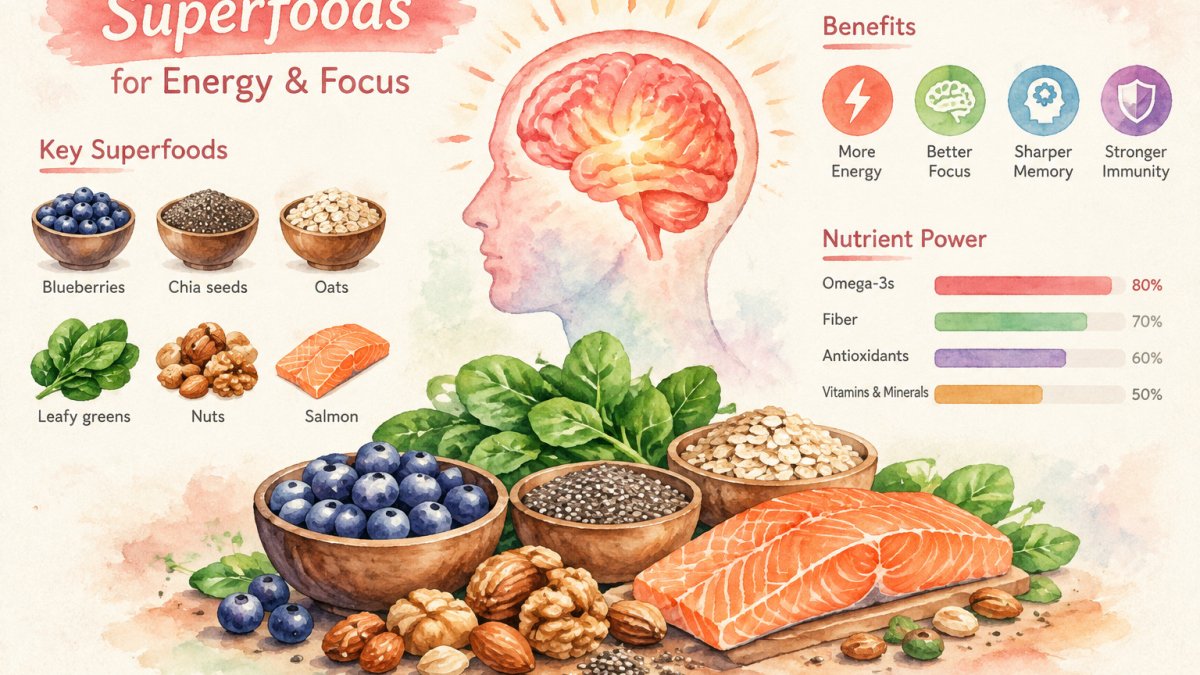
Focus depends on a well-fed brain, adequate hydration, and stable blood sugar. Foods rich in omega-3 fatty acids, such as salmon, sardines, and walnuts, are among the most studied for their role in brain health. Berries provide antioxidants, and leafy greens supply folate and other nutrients involved in normal bodily function. Learn more about specific herbs and spices like turmeric and ginger that support brain and body health.
Be realistic about what this means. A bowl of blueberries will not sharpen a tired mind in twenty minutes. Consistent eating over weeks is the more reliable path, and a noticeable change in concentration usually reflects a broader improvement in diet and sleep.
Top 10 Energy Foods to Add to Your Pantry
These staples are widely available, affordable compared with many specialty products, and easy to combine into meals: see the broader guide to everyday superfoods for how these choices fit overall daily nutrition.
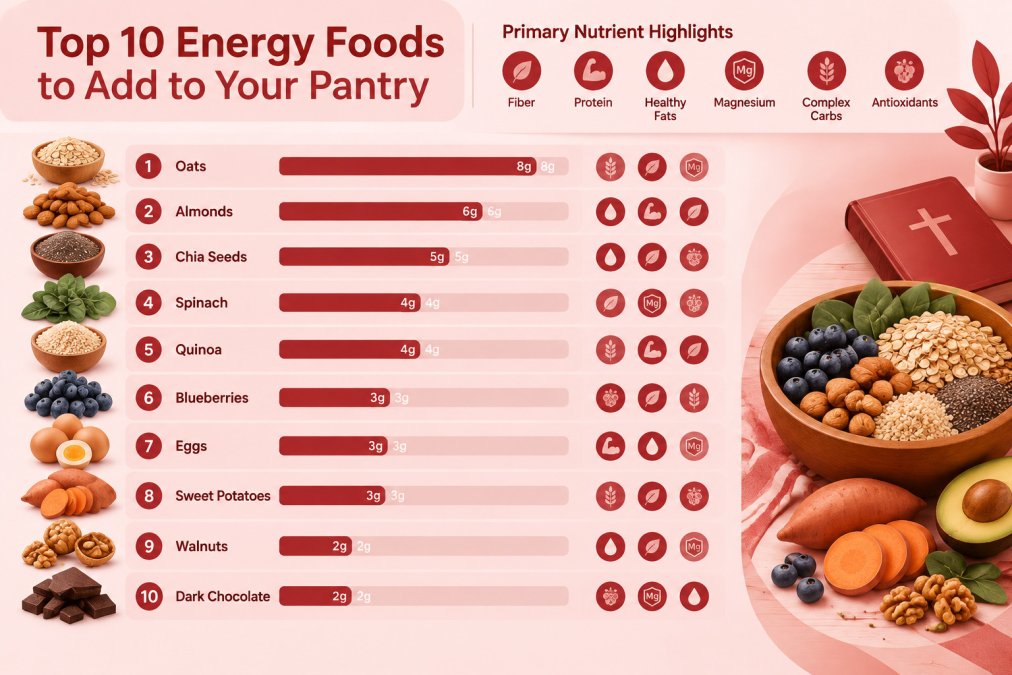
- Oats: slow-digesting complex carbohydrates and soluble fiber
- Lentils: plant protein and fiber in one inexpensive ingredient
- Walnuts: omega-3 fats plus protein for snacks
- Chia seeds: fiber, protein, and omega-3s; soak them before eating
- Salmon or sardines: protein and omega-3 fatty acids
- Blueberries: antioxidants and fiber in a low-calorie package
- Spinach and kale: folate, magnesium, and iron
- Eggs: complete protein and B vitamins
- Quinoa: a grain that offers protein alongside carbohydrates
- Avocado: monounsaturated fat and fiber
Stock a few of these each week rather than trying to buy all ten at once. Serving sizes matter: a small handful of nuts and a palm-sized portion of fish usually provide meaningful nutrition without excess calories.
Foods That Fight Fatigue and What Else Causes It
Food is one factor in fatigue, but not the only one. Poor sleep, dehydration, skipped meals, prolonged stress, and certain medical conditions can all leave you tired regardless of diet. If fatigue is persistent or severe, a doctor is the right person to evaluate it.
Timing, Hydration, and Meal Rhythm
When you eat can matter as much as what you eat. A common pattern is a heavy, refined-carbohydrate lunch followed by a sharp afternoon dip; spreading protein and fiber across the day tends to feel steadier. Skipping breakfast and then overeating at lunch is another frequent cause of mid-afternoon crashes. Even mild dehydration, often before you feel thirsty, can show up as tiredness or poor concentration, so keeping water available through the day is a simple, low-cost step.
Caffeine, Blood Sugar, and Energy Crashes
Caffeine can help alertness in the short term but may disrupt sleep if taken late in the day, which worsens tiredness the next morning. Sugary snacks produce a quick lift followed by a dip, which is why pairing carbohydrates with protein or fat tends to feel more even. A practical way to avoid sharp swings is to keep caffeine earlier in the day, pair carbohydrate snacks with protein or fat, and avoid relying on sweets as the main fix for a slump.
Many people also find that a small afternoon snack, such as apple slices with almond butter, prevents the mid-afternoon crash better than skipping lunch and reaching for sweets. Dietary needs vary, so people with allergies, diabetes, or other conditions should adapt these ideas with their healthcare provider.
When Fatigue Is Not a Food Problem
Diet can support energy, but it cannot fix every cause of tiredness. Persistent fatigue, unexplained weight change, or fatigue that interferes with daily life deserves medical assessment rather than another dietary tweak. A doctor can check for common contributors such as iron deficiency or thyroid issues, which food choices alone will not resolve.
How to Add Superfoods to Your Diet
Start with one change at a time. Before you buy, read our guide to choosing quality organic foods, which covers labels, certifications, and freshness. Swap white bread for whole-grain bread, add a handful of berries to breakfast, or cook lentils once a week and use them across several meals.
A simple template for a balanced meal:
Protein (eggs, fish, beans, or tofu) + Vegetables (spinach, broccoli, or peppers) + Complex carbohydrate (oats, quinoa, or sweet potato) + Healthy fat (avocado, nuts, or olive oil)
Watch out: buying a large quantity of a specialty ingredient before you know you will use it often leads to waste. Begin with small packages and build from there.
Budget also matters. Frozen berries and vegetables are as nutritious as fresh and often cheaper, and dried beans cost far less than canned or specialty alternatives.
Start Building Your Energy-Focused Pantry at Allstarhealth
A well-stocked pantry makes healthy eating easier to sustain. Allstarhealth offers a curated selection of natural and organic pantry staples, including grains, seeds, and superfoods, alongside biblical and ancient recipes for anyone who wants to cook with traditional ingredients. Pricing depends on quantity and delivery options, so check the current catalog for exact costs.
Begin with the staples above, choose a few recipes that fit your routine, and build from there. Follow this step-by-step guide to organizing a healthy, lasting pantry. Explore the Allstarhealth shop to start your energy-focused pantry today.
Frequently Asked Questions
What superfoods boost energy?
No single food delivers instant energy. Foods rich in complex carbohydrates, protein, fiber, and healthy fats, such as oats, eggs, nuts, seeds, beans, and berries, support steady energy because they digest slowly and help keep blood sugar stable. Nutrients like iron and B vitamins play a role in normal energy metabolism, so a deficiency can cause tiredness. Results vary by person, and food works best as part of a balanced diet with adequate sleep and hydration.
Are superfoods a substitute for a balanced diet?
No. Superfoods are nutrient-dense foods, but the term has no formal scientific definition and no single food supplies everything the body needs. Eating a variety of fruits, vegetables, whole grains, lean proteins, and healthy fats gives you a wider range of nutrients than relying on a few standout ingredients. Think of superfoods as useful additions to a varied diet, not replacements for it.
Can superfoods provide steady energy throughout the day?
Foods that combine fiber, protein, and healthy fats with complex carbohydrates tend to support steadier energy than sugary snacks, which can cause a quick spike followed by a crash. Pairing an apple with almond butter or adding chia seeds to oatmeal are simple examples. Steady energy also depends on regular meals, water intake, and enough sleep, so food alone rarely solves persistent tiredness.
How can I add superfoods to everyday meals?
Start small. Add a handful of berries or spinach to breakfast, sprinkle seeds on yogurt or salads, swap white rice for quinoa a few times a week, and keep nuts on hand for snacks. Batch-cooking grains and roasting vegetables ahead of time makes weekday meals faster. Choose foods you enjoy, since a superfood you never eat offers no benefit.