Last Updated: October 28, 2026
Quick Summary
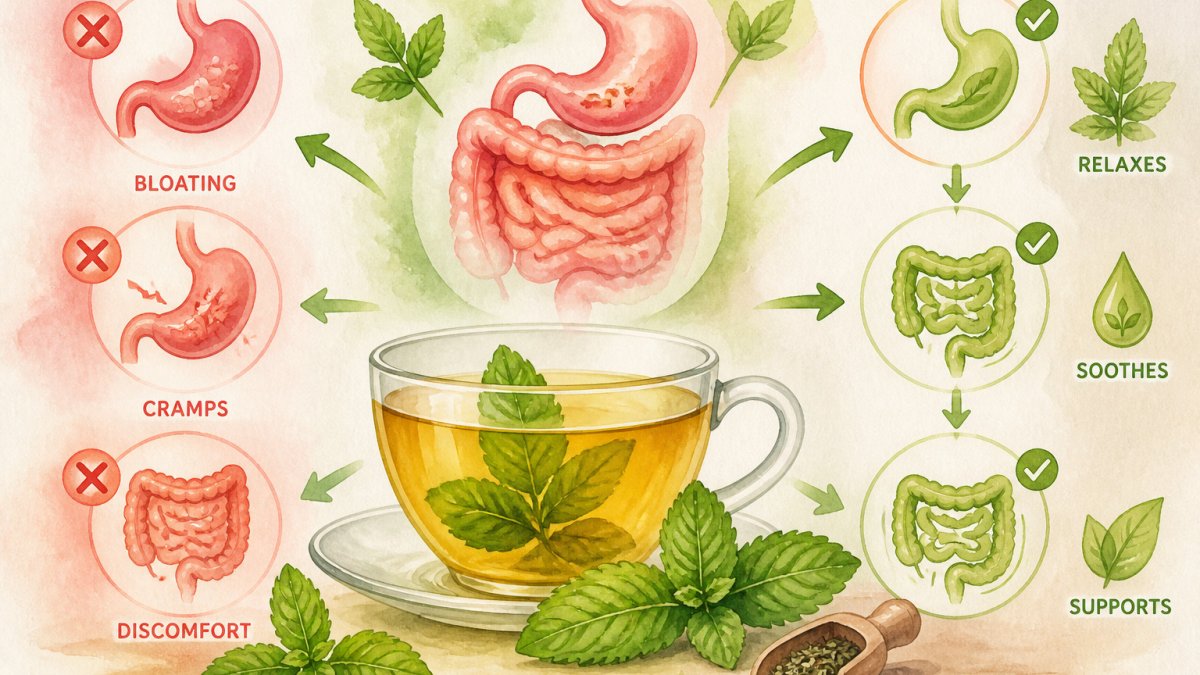
Peppermint tea may ease bloating, gas, cramping and post-meal fullness for some people, but research on tea specifically is limited. Does peppermint tea work for digestion? The evidence is strongest for peppermint oil in capsule form, while tea’s benefits are mostly traditional rather than proven.
- Peppermint tea is a caffeine-free herbal infusion made from dried peppermint leaves.
- Most people use one to two cups per day, typically after meals.
- Peppermint may relax the valve between the stomach and esophagus, so reflux sufferers should be cautious.
- If symptoms do not improve after two to three weeks of regular use, tea is unlikely to be the right solution.
- Persistent or severe abdominal pain should be checked by a healthcare provider.
Table of Contents
- What Is Peppermint Tea and Why Is It Used for Digestion?
- Health Benefits of Peppermint Tea for the Digestive System
- What the Evidence Says About Peppermint Tea and Digestion
- How Long Does Peppermint Tea Take to Work?
- Peppermint Tea Side Effects and Who Should Avoid It
- Choosing the Best Peppermint Tea for Digestion
- Start Your Peppermint Tea Routine With Allstarhealth
- Frequently Asked Questions
What Is Peppermint Tea and Why Is It Used for Digestion?
Peppermint tea is a caffeine-free herbal infusion made by steeping the dried leaves of the peppermint plant in hot water. For generations, people have turned to it after meals, and many still do today. So does peppermint tea work for digestion? The evidence for tea specifically is limited.
Scripture offers a fitting picture for this kind of care. “Gracious words are a honeycomb, sweet to the soul and healing to the bones” (Proverbs 16:24). Just as honey is sweet, a warm cup of herbal tea can be part of a meal-time ritual. At Allstarhealth, we believe the best approach is to understand what a remedy can and cannot do before adding it to your routine.
Peppermint contains menthol, the compound responsible for its cooling taste.
Why keep a box in the pantry? It is simple and easy to brew. But simple does not mean magic. The sections below separate what tea may do from what the research actually shows.
Health Benefits of Peppermint Tea for the Digestive System
Peppermint tea is discussed in connection with a handful of common digestive complaints:
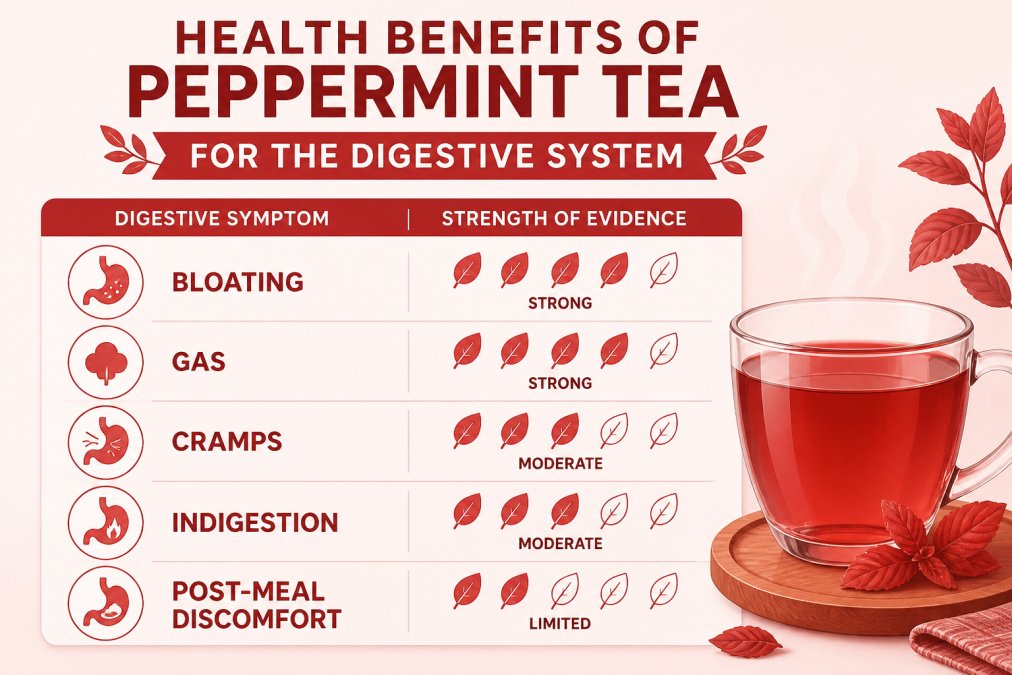
- Bloating that makes the stomach feel tight and full
- Gas and trapped wind that cause discomfort
- Cramping in the abdomen
- Indigestion after a large or rich meal
- Post-meal fullness that lingers longer than expected
Easing Bloating and Gas
Here is a simple way to test it for yourself:
- Brew one cup after your largest meal of the day
- Note how your stomach feels one hour later
- Repeat for a week and track any changes
If you notice no difference after consistent use, the tea may simply not suit your body.
Soothing Post-Meal Discomfort and Cramps
A full stomach can feel heavy and uncomfortable. Sipping a warm drink slowly after eating is a habit some people enjoy.
However, persistent or severe pain should never be ignored. If cramping keeps returning, speak with a healthcare provider to find the underlying cause.
What the Evidence Says About Peppermint Tea and Digestion
This is the section where most articles get vague, so let’s be specific. Research discussed in connection with peppermint and digestion is not about tea alone. Findings about one form of peppermint do not automatically transfer to another.
Here is how the evidence actually breaks down:
For reliable, up-to-date summaries of herbal remedies, the NIH National Center for Complementary and Integrative Health publishes evidence reviews worth checking. The Mayo Clinic’s guidance on digestive health is also a solid starting point for understanding common digestive symptoms and when to seek care.
How Long Does Peppermint Tea Take to Work?
Watch out: if your symptoms do not improve after two to three weeks of regular use, the tea is unlikely to be the right solution for you.
Peppermint Tea Side Effects and Who Should Avoid It
Most people tolerate peppermint tea well, but “generally safe” is not the same as “right for everyone.” This section covers who should pause before making it a daily habit, and why. For general guidance on safe use and dilution, you can read essential oil safety tips.
The reflux connection, explained.
Other possible side effects. These are uncommon but worth knowing:
Who should check with a healthcare provider first:
When tea is not the answer.
The U.S. National Library of Medicine’s MedlinePlus provides trustworthy information on herbal supplement safety and possible drug interactions, and it is a good place to check before starting any new herbal habit.
Choosing the Best Peppermint Tea for Digestion
Not all peppermint teas are the same. When choosing one, look for a few key qualities:
- Pure peppermint leaves with no artificial flavors
- Clear labeling that lists all ingredients
- Freshness, since dried herbs lose potency over time
- Loose leaf or quality tea bags that allow proper steeping
Check the current price and availability on each product page.
Start Your Peppermint Tea Routine With Allstarhealth
The evidence for peppermint tea specifically is limited.
Frequently Asked Questions
How does peppermint help your digestion?
Peppermint contains menthol, which is thought to relax smooth muscle in the digestive tract. This may ease cramping and help gas move through the intestines more comfortably. Most of the research on this effect uses enteric-coated peppermint oil capsules rather than tea, so the tea’s effect is less well studied. Many people use peppermint tea after heavy meals as a gentle, caffeine-free option, and it is best viewed as a comfort measure rather than a treatment.
Can you have peppermint tea while pregnant?
Peppermint tea is generally considered safe in normal food amounts for many people, but pregnancy is a situation where you should check first with your doctor or midwife. Large amounts of peppermint, especially concentrated oil, may not be advisable during pregnancy. If you notice heartburn or nausea, ask a healthcare professional which options suit you. Do not rely on herbal tea as a substitute for prenatal care or medical advice.
Can peppermint tea make acid reflux worse?
Yes, it can. Peppermint is known to relax the lower esophageal sphincter, the muscle that keeps stomach acid from rising. For people with acid reflux, GERD, or frequent heartburn, peppermint tea may trigger or worsen symptoms. If you have reflux, consider skipping peppermint tea after meals and speak with a healthcare provider about persistent symptoms.
Who should not drink peppermint tea?
People with gallbladder problems, GERD or hiatus hernia, and those taking certain medications should speak with a doctor before drinking peppermint tea regularly. Peppermint may interact with some drugs and can worsen reflux. Infants and young children should not be given concentrated peppermint products. If you have an existing health condition, a short conversation with your healthcare provider is the safest way to decide whether peppermint tea fits your routine.