Last Updated: November 6, 2026
Quick Summary
To work barley into daily meals, start by cooking a batch of pearl or hulled barley, then use it at breakfast as porridge or a savory bowl, and at lunch and dinner in salads, soups, or as a rice replacement. Pearl barley cooks in 25 to 40 minutes, while hulled barley needs 45 to 60 minutes. Cooked barley keeps four to five days in the fridge.
- Pearl barley cooks in 25 to 40 minutes; hulled barley takes 45 to 60 minutes.
- Soak hulled barley for one hour beforehand to even out the cook.
- Cook a large batch on Sunday and portion it for the week.
- Use cooked barley in porridge, grain salads, soups, or as a rice replacement.
- Store cooked barley in a sealed container for four to five days, or freeze it for up to three months.
Table of Contents
- What Is Barley and Why Add It to Your Meals?
- Health Benefits of Eating Barley Every Day
- How to Cook Barley So It Stays Tender
- Barley Breakfast Ideas to Start Your Morning
- Ways to Use Cooked Barley at Lunch and Dinner
- How to Store Barley and Cooked Barley Safely
- Biblical Significance of Barley and Gracious Words
- Start Building Barley Into Your Pantry Today
- Frequently Asked Questions
Barley is one of the oldest cultivated grains, and it still fits easily into modern cooking, making it simple to bring barley into daily meals. Barley is a practical place to start with simple, whole ingredients. This guide shows how to add barley to breakfast, lunch and dinner, with steps you can follow this week to work barley into daily meals.
What Is Barley and Why Add It to Your Meals?
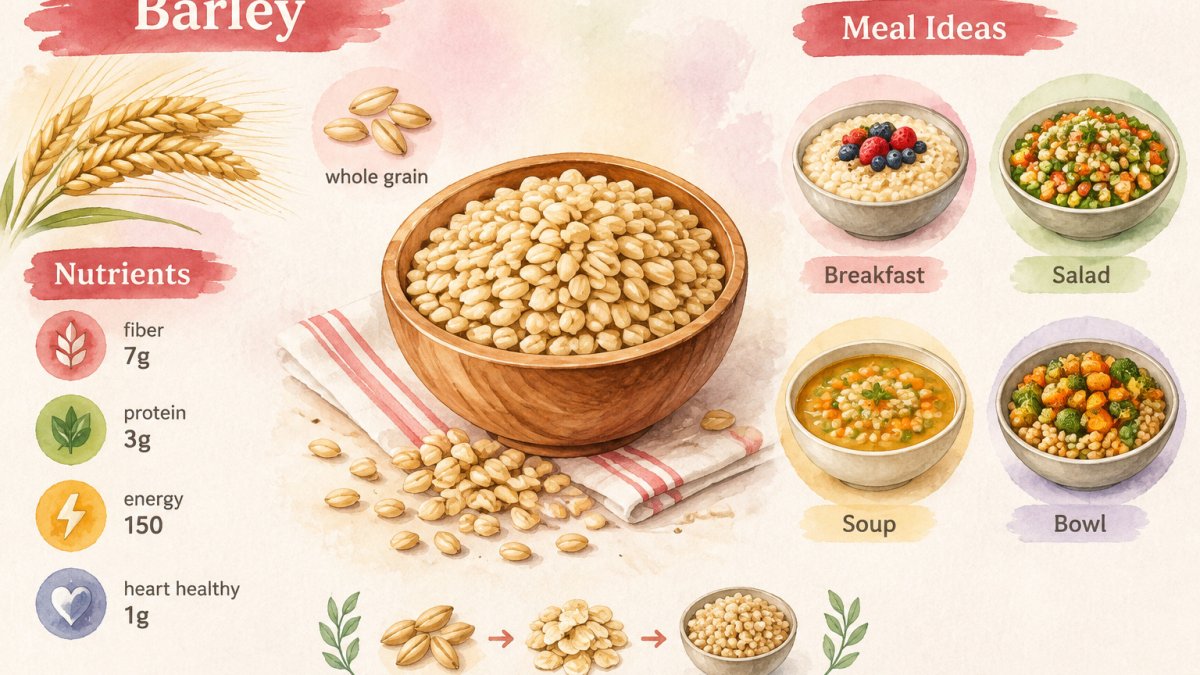
Barley is a whole grain with a mild, nutty flavor and a chewy texture. It works in soups, salads, porridge and side dishes, so it can replace rice or pasta with little effort.
Most people eat barley in one of two forms:
- Pearl barley: The outer hull and bran are removed, so it cooks faster.
- Hulled barley: More of the bran is kept, so it takes longer to cook and has a firmer bite.
Both forms make a good addition to daily meals. Choose hulled barley if you want more fiber and a heartier texture, and pearl barley if you want quicker weeknight cooking.
Health Benefits of Eating Barley Every Day
Barley is valued as a whole grain, and whole grains are generally linked to better eating patterns. Readers curious about digestion can learn how ancient grains support gut health in this detailed article. The main benefits people look for are:
- Fiber: Barley contains soluble fiber, which supports regular digestion.
- Fullness: Chewy grains tend to keep you satisfied for longer after a meal.
- Steady energy: Complex carbohydrates are digested more slowly than refined grains.
- Nutrients: Barley provides minerals such as magnesium and selenium.
Think of barley as one easy way to build a more balanced plate. Anyone managing a health condition should check with a doctor or dietitian first.
How to Cook Barley So It Stays Tender
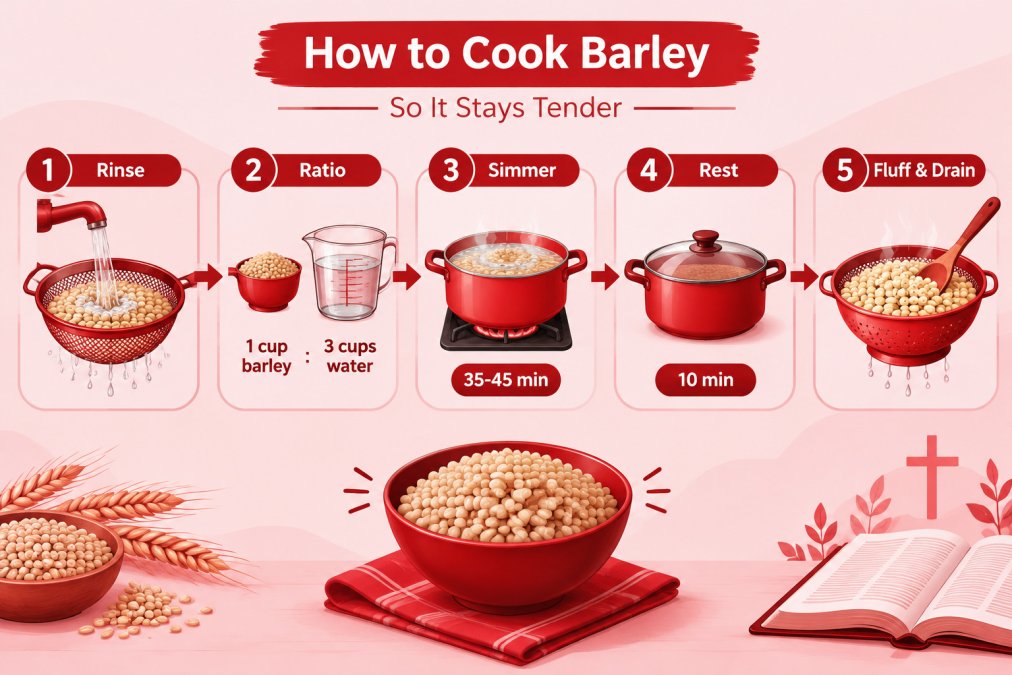
Barley is forgiving, but the two forms behave differently in the pot, and treating them the same is the most common reason batches turn out mushy or stubbornly chewy. You can start with pearl barley for cooking, which softens quickly. Use the method below as your baseline, then adjust for the form you bought.
The two cooking methods
- Absorption method: Combine 1 cup barley with 2 1/2 to 3 cups water (pearl) or 3 to 3 1/2 cups water (hulled), bring to a boil, cover, and simmer until the liquid is absorbed. This gives you dry, fluffy grains suited to salads and pilafs.
- Pasta method: Boil 1 cup barley in a large pot of salted water, then drain. This gives you more control over texture and is the safer choice for hulled barley, which can stay chewy past the absorption point.
Timing by form
- Pearl barley: 25 to 40 minutes simmering. It is already polished, so it softens quickly.
- Hulled barley: 45 to 60 minutes simmering, and it benefits from a 1-hour soak beforehand to even out the cook.
- Quick or pre-steamed barley: 10 to 15 minutes; check the package, since these products vary.
Step-by-step
- Rinse the grain in cold water to remove surface dust and loose starch.
- Optional soak: Cover hulled barley with water and soak 1 hour (or overnight) to cut cooking time and improve texture.
- Measure using the ratios above, and add a pinch of salt to the water.
- Simmer with the lid ajar so steam can escape and the pot does not boil over.
- Test at the low end of the time range by biting a grain; it should be tender with a slight chew, not chalky in the center.
- Rest off the heat, covered, for 10 minutes, then fluff with a fork.
Troubleshooting
- Mushy grains: You used too much water or cooked pearl barley past 40 minutes. Drain immediately and spread on a sheet pan to cool.
- Chewy centers: Hulled barley needs more time or a soak; add hot water in 1/4-cup increments and keep simmering.
- Sticky clumps: Rinse the barley before cooking and stir once at the start, then leave it alone.
Watch out: Salting the water heavily before the grains are tender can toughen the bran on hulled barley, so salt lightly at the start and adjust at the end.
Batch cooking for the week
Cook 2 to 3 cups of dry barley at a time. Spread the cooked grain on a tray to cool quickly, then refrigerate in portions. This one batch becomes the base for the breakfast, lunch, and dinner ideas below.
The table below summarises the cooking times and ratios for each barley form so you can match the method to the grain you bought.
| Barley form | Cooking time | Method note |
|---|---|---|
| Pearl barley | 25 to 40 minutes | Already polished, softens quickly |
| Hulled barley | 45 to 60 minutes | Soak 1 hour beforehand to even out the cook |
| Quick or pre-steamed barley | 10 to 15 minutes | Check the package, as products vary |
Barley Breakfast Ideas to Start Your Morning
Cooked barley makes a satisfying start to the day. Try these simple options:
- Barley porridge: Simmer cooked barley with milk, cinnamon and a little honey.
- Savory breakfast bowl: Top warm barley with a fried egg, sliced avocado and greens.
- Make-ahead batch: Cook a large pot on Sunday and reheat portions with a splash of water during the week.
Fruit such as berries, apple slices or chopped dates adds natural sweetness without much sugar.
Ways to Use Cooked Barley at Lunch and Dinner
Cooked barley fits well into midday and evening meals:
- Grain salad: Toss with cucumber, tomato, herbs and lemon juice.
- Soup base: Add to vegetable, bean or chicken soup near the end of cooking.
- Rice replacement: Serve alongside roasted vegetables or grilled fish.
- Stuffed vegetables: Mix with onions, herbs and cheese, then fill peppers or zucchini.
Because barley holds its shape, it works well in meals you plan to reheat or pack for lunch.
How to Store Barley and Cooked Barley Safely
Dry barley is shelf-stable, but it is not indestructible. Two things shorten its life: moisture, which invites mold and pests, and the natural oils in the bran, which can turn rancid over time. Hulled barley keeps more bran, so it is more vulnerable to rancidity than pearl barley.
Storing dry barley
- Container: Use a glass or food-grade plastic container with a tight lid, or a mylar bag for long-term storage. Squeeze out air before sealing.
- Location: A cool, dark, dry cupboard away from the stove and dishwasher. Heat and humidity are the enemies.
- Shelf life: Pearl barley keeps about 6 to 12 months at room temperature; hulled barley is best used within 3 to 6 months because of its bran oils. For longer storage, refrigerate or freeze the grain.
- Pest prevention: Add a bay leaf to the container and inspect the grain monthly. Freeze new bags for 48 hours before storing to kill any eggs already present.
Watch out: If you see webbing, small moths, or tiny holes in the grains, discard the whole container rather than trying to sift the bugs out; the infestation has already spread.
Storing cooked barley
- Cool fast: Spread cooked barley on a tray so it drops below room temperature within an hour, then refrigerate. Do not leave it in a deep pot, where the center stays warm.
- Fridge life: Keep in a sealed container for 4 to 5 days.
- Freezer life: Portion into bags or containers and freeze for up to 3 months. Freeze flat for faster thawing.
- Reheating: Reheat until steaming hot, adding a splash of water to loosen the grains. Never reheat more than once.
Signs barley has gone bad
Smell the grain before cooking. A musty, sour, or paint-like odor means it has spoiled or gone rancid. Dry barley that has clumped or shows moisture inside the container should be thrown out. Cooked barley that is slimy or smells off should be discarded, not tasted.
Small-batch and pantry-friendly note
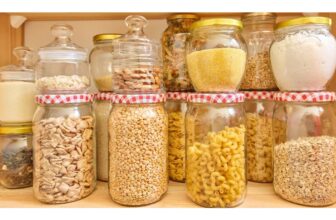
If you are stocking a pantry for the long term, pearl barley stores longer than hulled, and vacuum-sealed or oxygen-absorber bags extend shelf life considerably. Rotate your stock by using the oldest bag first, and label each container with the date you bought it.
Biblical Significance of Barley and Gracious Words
Barley appears throughout Scripture as a staple food. It was one of the grains of the harvest and a common part of daily bread in the ancient world. Its place in the biblical story reminds readers that simple, nourishing food has long been a gift.
Scripture also reminds us that our words nourish others. As Proverbs 16:24 says, “Gracious words are a honeycomb, sweet to the soul and healing to the bones.” Just as barley feeds the body, kind and encouraging words can refresh the people around us. Many families find that sharing a meal of simple grains becomes a natural time for that kind of conversation.
Start Building Barley Into Your Pantry Today
Start small. Choose one breakfast, one lunch and one dinner to try with barley this week. Keep a bag of pearl or hulled barley on hand, cook a batch on Sunday, and build from there.
Explore the selection, choose the barley that fits your cooking style, and begin turning this ancient grain into a regular part of your daily meals.
Frequently Asked Questions
Can you eat barley every day?
Yes, most healthy adults can eat barley daily as part of a balanced diet. Barley is a whole grain that provides fiber. Start with a half cup of cooked barley per day, then adjust based on how your body responds. If you have a condition affecting gluten tolerance, note that barley contains gluten and is not suitable for people with celiac disease. Varying your grains across the week also gives you a wider range of nutrients.
How do you cook barley for everyday meals?
Rinse one cup of pearled or hulled barley, then combine it with three cups of water or broth in a pot. Bring it to a boil, reduce the heat, cover, and simmer for 35 to 45 minutes for pearled barley, or about 50 minutes for hulled barley. Let it rest covered for 10 minutes, then fluff with a fork. Cooking a larger batch at the start of the week makes it easy to add to meals on busy days.
What meals can you add barley to?
Barley works well in soups, stews, salads, grain bowls, and risotto-style dishes. It can replace rice in many recipes, though it needs a longer cooking time and a bit more liquid. Stir cooked barley into vegetable soup, toss it with roasted vegetables and a lemon dressing, or mix it into a bowl with beans and greens. Its chewy texture holds up well in dishes that are reheated.
How long does cooked barley last in the refrigerator?
Cooked barley keeps for about four to five days in an airtight container in the refrigerator. For longer storage, freeze it in portions for up to three months. Cool it quickly after cooking, spread it on a tray if you have a large batch, and store it within an hour or two. Reheat portions with a splash of water in the microwave or on the stovetop until hot throughout.