Last Updated: October 23, 2026
Quick Summary
Whether is organic baking powder worth the cost depends on your baking frequency and priorities. Organic powder performs identically to conventional in recipes, but carries a higher per-can price; however, since recipes use only one to two teaspoons per batch, the actual cost difference per use is often smaller than the sticker price suggests. It’s worth the premium if you bake regularly and value certified organic sourcing, but conventional baking powder works just as well if budget is your priority.
- Organic and conventional baking powder perform identically in cakes, pancakes, and baked goods because the leavening chemistry is the same.
- Cost per batch is typically one to two teaspoons, making the per-use premium smaller than the per-can price difference suggests.
- Organic certification guarantees the starch and acids meet USDA organic standards, prohibiting synthetic pesticides and genetically engineered ingredients.
- Freshness matters more than organic status; test baking powder before use and replace it within 12 to 18 months.
- Phosphate-free conventional baking powder offers a middle option for those avoiding additives without paying organic premiums.
Table of Contents
- What Is Organic Baking Powder?
- Organic vs Conventional Baking Powder: Key Differences
- Understanding Phosphate-Free Baking Powder
- Baking Performance: Does Organic Powder Rise as Well?
- How to Test Baking Powder Freshness
- Homemade Baking Powder Recipe
- Is Organic Baking Powder Worth the Cost?
- Frequently Asked Questions
What Is Organic Baking Powder?
Organic baking powder is a leavening agent made from organic ingredients that help baked goods rise without synthetic additives or chemical processing. Choosing between organic and conventional baking powder matters to home cooks building a truly healthy pantry. The difference lies not just in certification, but in sourcing, processing, and what it contains.
How It Works as a Leavening Agent
Baking powder works through a simple chemical reaction: mixed with liquid and heat, it releases carbon dioxide gas, creating the bubbles that make cakes fluffy, pancakes light, and biscuits tender.
The acid component (typically cream of tartar in quality formulations) reacts with sodium bicarbonate to produce those lift-giving bubbles. This is why freshness matters: as baking powder ages, the acid and base lose potency, and your baked goods won’t rise as well.
Biblical Significance of Pure Ingredients
Throughout Scripture, there’s a consistent theme of purity and wholeness in what we consume. “Gracious words are a honeycomb, sweet to the soul and healing to the bones” (Proverbs 16:24) speaks to nourishment that truly serves us. Choosing ingredients without unnecessary additives honors the principle of stewarding our bodies well, and many who follow faith-based wellness practices find that selecting organic, minimally processed ingredients aligns with their values around natural provision and gratitude for whole foods.
Organic baking powder uses the same leavening chemistry as conventional powder, but sources its ingredients without synthetic pesticides or unnecessary chemical additives.
Organic vs Conventional Baking Powder: Key Differences
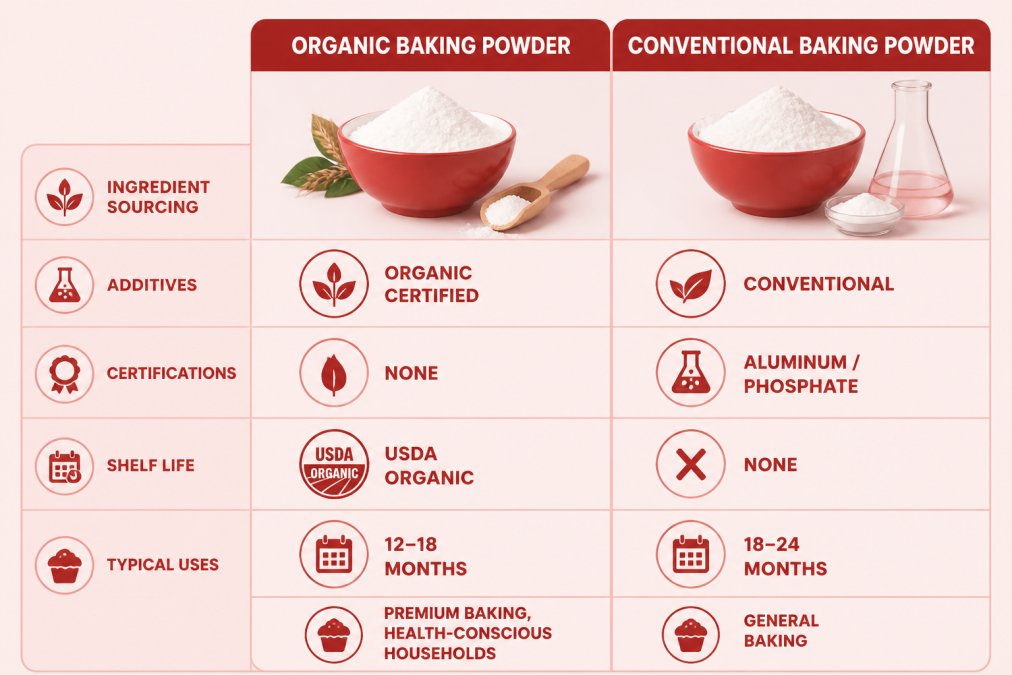
The core difference between organic and conventional baking powder comes down to three factors: ingredient sourcing, additives, and certification standards.
Ingredient Quality and Sourcing
Organic baking powder must be made from organically certified sodium bicarbonate and acid components, sourced from minerals untreated with synthetic pesticides or fertilizers. Conventional baking powder uses sodium bicarbonate from the same mineral sources, but without the organic certification requirements.
The real distinction emerges in the starch component. Conventional baking powder often uses cornstarch from genetically modified corn or wheat starch treated with pesticides.
For home cooks building a nutritious, natural food supply, this sourcing difference is meaningful: you’re choosing ingredients grown and processed according to organic standards, which many households prioritize as part of their wellness approach.
Additives and Phosphate Content
Conventional baking powder frequently contains additives like aluminum compounds or sodium aluminum phosphate, which act as anti-caking agents and keep the powder dry on the shelf.
Organic baking powder typically avoids these additives altogether. Instead of relying on chemical anti-caking agents, organic formulations often use organic rice flour or organic potato starch to absorb moisture and prevent clumping.
Check the ingredient label closely. Organic baking powder should list only three to four ingredients: sodium bicarbonate, acid (cream of tartar), starch, and possibly a natural anti-caking agent. Conventional versions often show additional chemical names you won’t recognize.
Understanding Phosphate-Free Baking Powder
Phosphate-free baking powder removes phosphate-based additives, most commonly sodium aluminum phosphate, and sometimes monocalcium phosphate or sodium acid pyrophosphate, from the formula. These compounds were never essential to leavening; they served as anti-caking agents and slow-release acids that helped manufacturers control when the powder reacted. Removing them simplifies the ingredient list and appeals to households avoiding phosphate additives for dietary reasons.
What ‘Phosphate-Free’ Means on a Label
A phosphate-free label is a manufacturer claim, not a regulated certification, so read the ingredient list rather than trusting the front of the can. Look for these terms and treat any of them as a phosphate source: sodium aluminum phosphate, monocalcium phosphate, sodium acid pyrophosphate, and dicalcium phosphate. A truly phosphate-free powder will list only sodium bicarbonate, a non-phosphate acid (cream of tartar is the most common), and a starch.
Does Removing Phosphate Change Performance?
The short answer is no for home baking. Phosphate-free formulations work identically in cakes, pancakes, and biscuits because the leavening reaction depends on the bicarbonate-acid pair, not on the phosphate. The trade-off is mainly shelf behavior: phosphate compounds helped keep powder dry and free-flowing, so phosphate-free versions may clump faster in humid kitchens.
Who Actually Needs Phosphate-Free?
Most home bakers do not need phosphate-free powder for health reasons, the amounts are small and approved. The choice becomes functional for people following a phosphate-restricted diet, often for kidney health, on the advice of a clinician; for everyone else, it’s a preference for a shorter ingredient list. Organic baking powder is inherently phosphate-free because organic certification prohibits aluminum compounds, so organic powder covers both goals.
Compare two cans side by side: an ‘aluminum-free’ conventional powder and an organic powder. The organic can should list three to four ingredients with no phosphate names; the conventional can may still list a phosphate compound even though the front label says aluminum-free.
Baking Performance: Does Organic Powder Rise as Well?
Many people wonder if they’re sacrificing quality for principle. The honest answer: organic and conventional baking powder perform identically in your recipes.
Testing in Cakes, Pancakes, and Baked Goods
The chemical reaction that makes baking powder work is the same regardless of whether the sodium bicarbonate is certified organic.
What matters far more than organic versus conventional is freshness. A fresh conventional baking powder outperforms stale organic baking powder every time.
The real performance variable isn’t the organic label, it’s whether you’re using baking powder within its useful lifespan, typically 12 to 18 months from purchase.
How to Test Baking Powder Freshness
Before you bake, test whether your baking powder still has lift. This simple check takes 30 seconds and prevents disappointing results.
Mix one teaspoon of baking powder with one-third cup of hot water. If it fizzes vigorously and immediately, it’s fresh and ready to use.
Store baking powder in a cool, dry place away from moisture.
Homemade Baking Powder Recipe
Making your own baking powder gives you complete control over ingredients and freshness. This approach appeals to those building a truly healthy pantry with ingredients they fully understand.
Using Cream of Tartar and Sodium Bicarbonate
The formula is straightforward: one part cream of tartar, one-half part sodium bicarbonate, and one part cornstarch (or arrowroot powder for a corn-free option).
For example, combine two tablespoons of cream of tartar, one tablespoon of baking soda, and two tablespoons of cornstarch. This yields roughly one-quarter cup of homemade baking powder. Use it at the same ratio as store-bought powder in your recipes.
The advantage is control: you choose organic cream of tartar and baking soda, select your starch (organic potato, tapioca, or cornstarch), and know exactly when it was made, so freshness is guaranteed.
The trade-off is convenience: homemade baking powder requires sourcing three separate ingredients and mixing them yourself. For those who bake frequently and value ingredient transparency, it’s worthwhile.
Homemade baking powder loses potency faster than commercial versions because it lacks the stabilizers that extend shelf life. Use it within two to three months for best results, and test it before each use.
Is Organic Baking Powder Worth the Cost?
The question of whether is organic baking powder worth the cost brings most home cooks to compare options. The honest answer depends on three measurable factors: the actual price premium per use, what organic certification does and does not guarantee, and how much of the product you will realistically use before it loses potency.
A Cost-Per-Use Comparison (Not Just Per Can)
Baking powder is used in teaspoons, not cans, so the only fair comparison is cost per teaspoon and cost per batch. A typical recipe uses one to two teaspoons. Here is the framework most home bakers find useful:
- Note the net weight on the can (often 8.1 oz or 10 oz for conventional, similar for organic).
- Note the number of teaspoons per container (roughly 6 teaspoons per ounce, so an 8 oz can holds about 48 teaspoons).
- Divide the shelf price by the teaspoon count to get cost per teaspoon.
- Multiply by the teaspoons in your recipe to get cost per batch.
A common pattern: organic baking powder often carries a premium compared to conventional shelf price, but because a batch uses only one to two teaspoons, the per-batch difference can be minimal. For a household baking once a week, the annual difference may be small; for one baking daily, it compounds. Run the math on your own can and recipe frequency, the premium is real, but often smaller per use than the sticker price suggests.
What Organic Certification Actually Guarantees
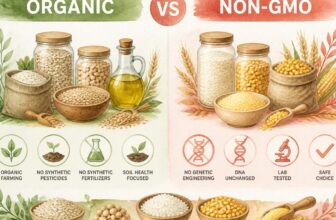
Organic certification is not a blanket health claim. For baking powder, it means the agricultural ingredients, typically the starch (organic corn, potato, or tapioca) and, where applicable, cream of tartar from organically grown grapes, were produced under USDA National Organic Program standards, which prohibit synthetic pesticides and fertilizers on the crop and prohibit genetically engineered ingredients.
What certification does not guarantee: it does not certify that the sodium bicarbonate mineral source is ‘healthier,’ it does not mean the product is aluminum-free by definition (though most organic formulas are), and it does not mean the product is more effective.
Shelf Life, Freshness, and the Real Cost of Waste
Here is the trade-off most cost comparisons miss: a more expensive product is only worth it if you use it before it dies. Baking powder loses potency over time, and organic versions may have a shorter window because they rely on starch rather than chemical anti-caking agents. If you bake infrequently, a large organic can may go stale before you finish it.
Health and Safety Considerations
From a health perspective, the difference between organic and conventional baking powder is modest, both are safe. Conventional additives, aluminum compounds and phosphates, are approved food additives used in small quantities. Some households avoid aluminum and phosphate additives as a principle of minimizing synthetic chemicals; if that is your priority, organic or phosphate-free conventional powder fits that philosophy.
Value for Your Budget and Household
| Consideration | Organic Baking Powder | Conventional Baking Powder | Phosphate-Free Conventional |
|---|---|---|---|
| Ingredient sourcing | Certified organic starches and acids | Standard processing | Standard processing |
| Additives | None (starch-based) | May contain aluminum/phosphate | Starch-based, no phosphate |
| Baking performance | Identical | Identical | Identical |
| Shelf life | 12-18 months | 18-24 months | 18-24 months |
| Cost per batch | Higher per can | Lowest | Middle |
| Best for | Organic-focused households | General baking | Those avoiding phosphate |
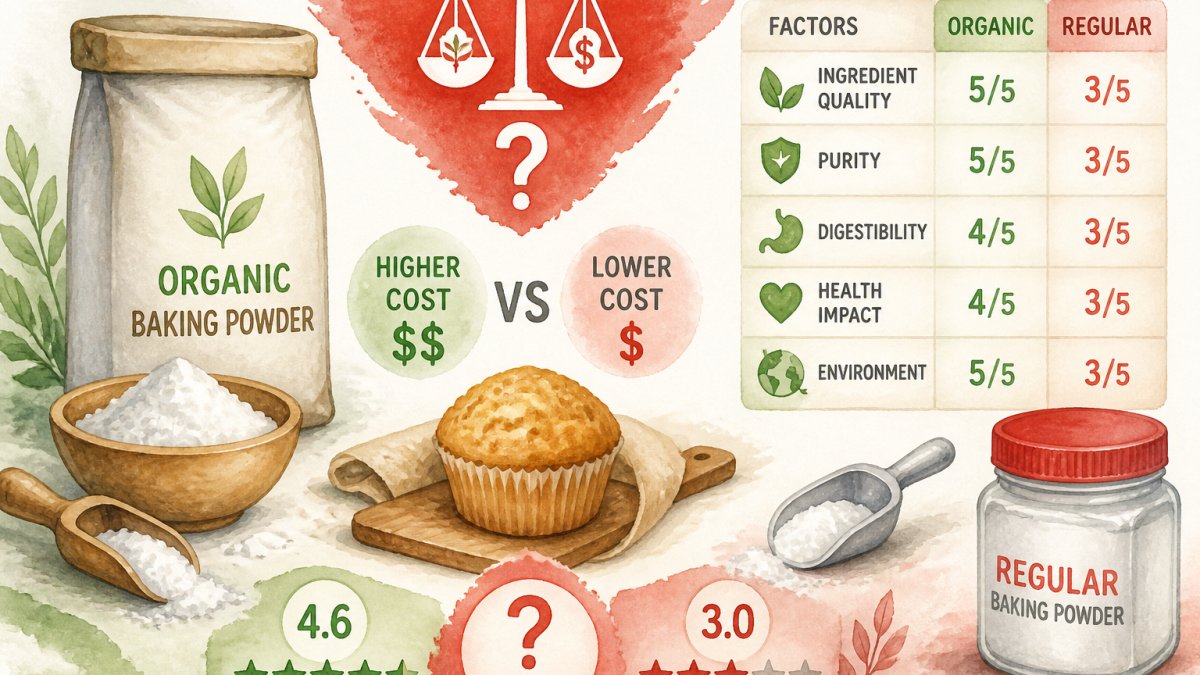
The premium is real per can but small per batch. Organic baking powder is worth it if you bake regularly, value certified sourcing, and will use the can before it goes stale. If you bake rarely or budget is the priority, conventional performs identically at lower cost, and phosphate-free conventional splits the difference.
The honest answer: organic baking powder is worth the cost if you’re committed to a pantry with certified organic, minimally processed ingredients and you bake often enough to use it fresh. If budget is your primary concern and you have no dietary restrictions, conventional baking powder performs identically at lower cost. If you want to avoid phosphate additives without paying organic premiums, phosphate-free conventional baking powder splits the difference.
Frequently Asked Questions
What is the difference between organic and regular baking powder?
Organic baking powder is made from ingredients certified as organic, meaning they’re grown without synthetic pesticides or fertilizers. Conventional baking powder may contain additives like phosphates or aluminum compounds as anti-caking agents. Both work as leavening agents, but organic versions typically have fewer additives and rely on natural ingredients like cream of tartar and sodium bicarbonate. The functional difference in baking is minimal, though some prefer organic for ingredient purity.
Does organic baking powder work as well as conventional baking powder?
Yes, organic baking powder performs equally well in most baking applications. Both rise cakes, pancakes, and baked goods effectively when fresh. The leavening mechanism is identical, acid and base react to produce carbon dioxide gas. Performance depends more on freshness and proper storage than on whether the powder is organic or conventional. Testing freshness before use ensures reliable results regardless of type.
What does phosphate-free baking powder mean?
Phosphate-free baking powder contains no phosphate compounds, which are often used in conventional formulas as anti-caking agents and to control the leavening reaction. Many organic and specialty baking powders skip phosphates entirely, using cream of tartar or other natural acids instead. This appeals to shoppers avoiding phosphate additives, though both phosphate and phosphate-free powders are considered safe by food safety authorities.
Can you make baking powder at home?
Yes. Mix one part sodium bicarbonate with two parts cream of tartar and one part starch (cornstarch or arrowroot work well). Store in an airtight container and use immediately or within a few weeks. Homemade baking powder gives you full control over ingredients and works well for cakes and pancakes. It’s an option for those seeking complete ingredient transparency.