Last Updated: November 25, 2026
Quick Summary
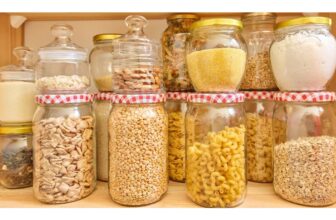
Glass jars and food-grade plastic buckets with tight-fitting lids are the most practical choices for storing grains and beans. Clear airtight containers suit everyday pantry use, while sealed food-grade buckets lined with a Mylar bag work better for bulk storage. Match the container size to how quickly you use the food.
- Airtight clear containers with a wide mouth make everyday rice and beans easy to scoop and check.
- Use a food-grade HDPE 5-gallon bucket lined with Mylar for larger long-term supplies.
- Store containers in a cool, dark, dry place away from direct sunlight.
- Inspect new beans and discard any with insects, dust, webbing or holes before storing.
- Label each container with its pack date so you can use the oldest supply first.
Table of Contents
- What Is the Best Container for Storing Grains and Beans?
- Why Proper Storage Matters: Health, Preservation and Biblical Stewardship
- Airtight Containers for Rice and Beans
- Food-Grade Buckets for Long-Term Grain Storage
- Grain Storage Container Sizes and How to Choose
- How to Store Dried Beans Long Term
- Putting Your Storage System to Work in the Pantry
- Start Stocking Your Pantry With Allstarhealth
- Frequently Asked Questions
What Is the Best Container for Storing Grains and Beans?
Glass jars and food-grade plastic buckets with tight-fitting lids are the most practical choices for storing grains and beans. The right container depends on how much you store and how long you plan to keep it. Proverbs 27:23 tells us to “be diligent to know the state of thy flocks,” and the same care applies to the pantry. Knowing what you store, and how it is kept, is part of faithful stewardship.
For everyday pantry use, a clear container with a wide mouth and an airtight seal makes it easy to see what you have and to scoop out what you need. For bulk storage, a sealed food-grade bucket lined with a Mylar bag is the more practical option.
Why Proper Storage Matters: Health, Preservation and Biblical Stewardship
Dry grains and beans keep their nutrition and flavor best when they stay dry, cool and sealed away from pests. Moisture and air are the main enemies of stored dry goods. Once they get in, grains can clump, go stale, or begin to spoil.
Good storage supports your health in several practical ways:
- Freshness: Airtight containers slow the loss of flavor and quality.
- Moisture control: Keeping humidity out helps prevent mold and clumping.
- Pest protection: Sealed containers keep weevils and moths from getting into your food.
- Less waste: Food you can keep is food you can actually eat.
Scripture links this care to wisdom. Proverbs 21:20 says, “There is treasure to be desired and oil in the dwelling of the wise.” Storing food well is one way to keep that treasure safe for your household.
Airtight Containers for Rice and Beans
For rice, lentils and dried beans kept in daily use, a clear, airtight container is usually enough. Look for a wide mouth so you can fill and scoop with ease, and a lid that seals firmly. Clear containers let you see your supply at a glance. Check whether a given container is airtight before you rely on it for long-term storage.
Match the container to the grain or bean
Storage needs differ by what you are keeping, so a single container style is rarely the best fit for everything in the pantry. The table below pairs common staples with the container and handling that suit them best.
| Grain or bean | Best container | Practical notes |
|---|---|---|
| White rice | 2 to 6 quart airtight clear container | Use within a few months of opening; keep in a dark cupboard |
| Brown rice and whole grains | Smaller airtight container, used quickly | Whole grains turn rancid faster than white rice because of their oils; buy in amounts you will finish |
| Lentils and split peas | 1 to 2 quart airtight jar or container | Small volumes are easy to scoop and rotate |
| Dried beans | 2 to 6 quart airtight container or Mylar-lined bucket | Older beans take longer to soften; label the pack date |
| Flour | Wide-mouth airtight container sized to your baking pace | Flour is fine and clumps easily; keep moisture out |
| Oily seeds and nuts | Small airtight container, refrigerated if possible | Oils go rancid at room temperature; store in small amounts |
Keeping a small working container on the shelf and refilling it from a larger sealed supply means the main stock is opened less often.
Storage conditions that actually matter
Dry grains and beans generally keep best in a cool, dark, dry spot. Aim for a steady pantry temperature rather than a warm spot above the stove or beside the fridge, and keep humidity low. Light speeds up quality loss in clear containers, so store them inside a cupboard rather than on an open shelf. Whole grains and oily seeds are the most sensitive to warmth and light; white rice and dried beans are more forgiving.
Watch out: Check the lid seal and wipe the rim each time you refill, since a worn seal or food crumbs in the gasket can let moisture in.
Food-Grade Buckets for Long-Term Grain Storage
For larger quantities, a food-grade HDPE 5-gallon bucket is a common choice. Lining a food-grade bucket with a Mylar bag and sealing it can provide a barrier against moisture, air and pests.
The bucket alone is not the complete setup. Pair it with a Mylar liner, an oxygen absorber if you use one, and a sealed lid. Store the buckets off the floor, in a cool, dry place away from direct sunlight.
Grain Storage Container Sizes and How to Choose
Size matters as much as material. Match the container to how quickly you use the food:
| Use case | Typical container | Best for |
|---|---|---|
| Daily pantry | 1 to 2 quart jars or containers | Rice, lentils, everyday beans |
| Monthly supply | 6 quart containers | Grains you cook weekly |
| Bulk storage | 5-gallon food-grade bucket | Long-term dry staples |
Smaller containers mean you open the main supply less often, which helps keep the rest fresh. Buy a size you can use within a reasonable time, and avoid large containers for foods you go through slowly. Prices vary by quantity, retailer and delivery option, so check Allstarhealth directly for current pricing on the containers and grains you need.
How to Store Dried Beans Long Term
Beans last longest when they are dry, sealed and kept cool. Put them in a food-grade container with a tight lid or a Mylar bag, and store that container in a dark, dry place. Adding an oxygen absorber to a sealed Mylar bag slows oxidation further. Before storing, check the beans for cracks, insects or moisture, and remove any damaged beans. Label each container with the date you packed it so you can rotate your supply.
A step-by-step pest prevention routine
Pantry pests such as weevils and moths are the most common reason a stored supply is lost, and prevention is far easier than rescue. A practical routine looks like this:
- Inspect on arrival. Pour new beans onto a tray and look for live insects, fine dust, webbing or small holes in the beans. Discard any infested portion.
- Clean the container first. Wash and fully dry the container and lid before filling. Any moisture left inside invites mold.
- Freeze as a precaution. Some people freeze newly bought beans for several days, then let them return to room temperature before sealing them into containers.
- Seal and label. Fill the container, add an oxygen absorber if you are using a Mylar bag, seal the lid, and write the pack date on the container.
- Store off the floor. Keep containers on a shelf away from direct sunlight and away from warm appliances.
- Check periodically. Every few months, open the working container, inspect for pests, and confirm the lid seal is intact.
What to do if you find pantry pests
If you discover insects in a container, isolate it immediately so the infestation does not spread to nearby supplies. Discard heavily infested food, and clean the shelf and surrounding containers thoroughly. Freeze salvageable dry goods for several days before resealing them in clean, dry containers. Check neighboring containers as well, since pests move easily between open packages.
Shelf life at a glance
Shelf life depends on the bean, the container and the storage conditions, so treat these as general ranges rather than guarantees. Dried beans kept cool, dark and sealed generally hold quality for a long time, while beans stored in warm or humid conditions decline faster. Older beans are safe to eat but often take longer to soften, so rotate the oldest supply into cooking first.
Food storage and pantry pest guidance
Watch out: Freezing beans and then sealing them while still cold can trap condensation inside the container, always let them come fully to room temperature first.
Putting Your Storage System to Work in the Pantry
Start with what you cook most. For ideas on which ancient grain staples to buy first, see that guide. Set up your daily containers first, then add bulk buckets for the staples you rarely run out of. Keep the newest packages behind the older ones so you use the oldest supply first.
Label everything, check seals every few months, and keep a simple inventory list. For a full plan, read how to build a biblical pantry. As Proverbs 24:27 counsels, “Prepare thy work without, and make it fit for thyself in the field; and afterwards build thine house.” A well-planned pantry is a practical act of preparation.
Start Stocking Your Pantry With Allstarhealth
Good containers protect your investment, but they work best when filled with quality food. Allstarhealth carries a curated selection of organic grains, beans and superfoods, along with resources for building a natural, nutritious pantry. Browse the current selection at blog.allstarhealth.net to find the staples that fit your household.
Button: Shop Pantry Staples
Card title: Stock your pantry with confidence
Card text: Organic grains, beans and superfoods to fill your storage containers.
Frequently Asked Questions
What is the best type of container to store grains and beans?
For everyday use, airtight containers made of glass or food-grade plastic keep rice and beans fresh and visible on the shelf. For bulk or long-term storage, food-grade HDPE buckets lined with a Mylar bag and sealed with an oxygen absorber work better. Choose glass for convenience and inspection, and buckets when you are storing large quantities for months or years. Whatever you choose, keep containers in a cool, dry place away from light and moisture.
Are airtight containers best for storing dried beans?
Airtight containers are a strong choice for dried beans because they limit moisture and block the pests that find their way into loosely sealed bags. A tight lid makes it harder for insects to enter and helps the beans stay dry. Beans stored this way are generally best used within the period recommended for the product, and you should check them periodically for signs of moisture or insects before cooking.
Is glass or food-grade plastic better for storing rice and beans?
Both materials work well for rice and beans as long as they are food grade and sealed properly. Glass is non-porous, easy to clean and lets you see your supply at a glance, but it is heavier and breakable. Food-grade plastic is lightweight, stackable and less likely to break. Choose based on your pantry layout and how often you need to refill your containers.
How do you keep pantry pests out of stored grains and beans?
Start by inspecting new grains and beans for signs of insects before storing them. Transfer purchases into sealed, airtight containers as soon as you get them home, and clean out any residue from old containers before refilling. Store containers in a cool, dry area, and check them regularly. If you find webbing, small holes or moving insects, discard the affected food and clean the container thoroughly before reusing it.