Last Updated: October 25, 2026
Quick Summary
To store bulk organic grains for maximum freshness, use airtight containers like mylar bags with oxygen absorbers in a cool, dark, dry space below 70°F. Proper storage protects grains from moisture, pests, and light, keeping them fresh for months to years depending on the grain type and storage method.
- Brown rice lasts 3-6 months at room temperature but 5-10 years with oxygen absorbers in cool conditions
- Mylar bags with oxygen absorbers are the best option for long-term grain storage
- Store grains in temperatures between 50°F and 70°F with humidity below 15% to prevent mold and pests
- Airtight containers are your first defense against pantry pests like weevils, moths, and beetles
- Label containers with grain type and purchase date, then rotate stock by using oldest grains first
Table of Contents
- What Is Proper Grain Storage and Why It Matters
- Best Containers for Grain Storage
- How Long Do Whole Grains Last in Your Pantry
- How to Store Wheat Berries and Other Specialty Grains
- Protecting Grains from Pantry Pests and Moisture
- Temperature, Humidity, and Environment Control
- Building Your Grain Storage System at Home
- Frequently Asked Questions
What Is Proper Grain Storage and Why It Matters
Proper grain storage keeps your organic grains fresh, nutritious, and safe to eat for months or even years. How to Store Organic Grains Long Term explores this topic in greater depth for those seeking comprehensive guidance. When you store bulk organic grains correctly, you protect them from moisture, pests, and light damage that can destroy their nutritional value and taste.
The Bible reminds us of grain’s importance to human health and sustenance. Proverbs 11:26 tells us, “People curse the one who hoards grain, but they pray God’s blessing on the one who is willing to sell.” This speaks to the responsibility we have in storing and preserving food wisely for ourselves and our families.
At Allstarhealth, we understand that building a healthy pantry starts with knowing how to preserve your ingredients properly. Your organic grains are an investment in your family’s wellness, so protecting them matters.
Most home cooks don’t realize that grain storage begins the moment you bring your purchase home. Temperature, humidity, air exposure, and pest access all affect how long your grains stay fresh. A simple airtight container in a cool, dark spot beats expensive storage systems every time.
Here’s what you’ll learn in this guide: the best containers for your grains, how long different types actually last, specific strategies for specialty grains like wheat berries, and how to build a pest-proof storage system that works year-round.
Best Containers for Grain Storage
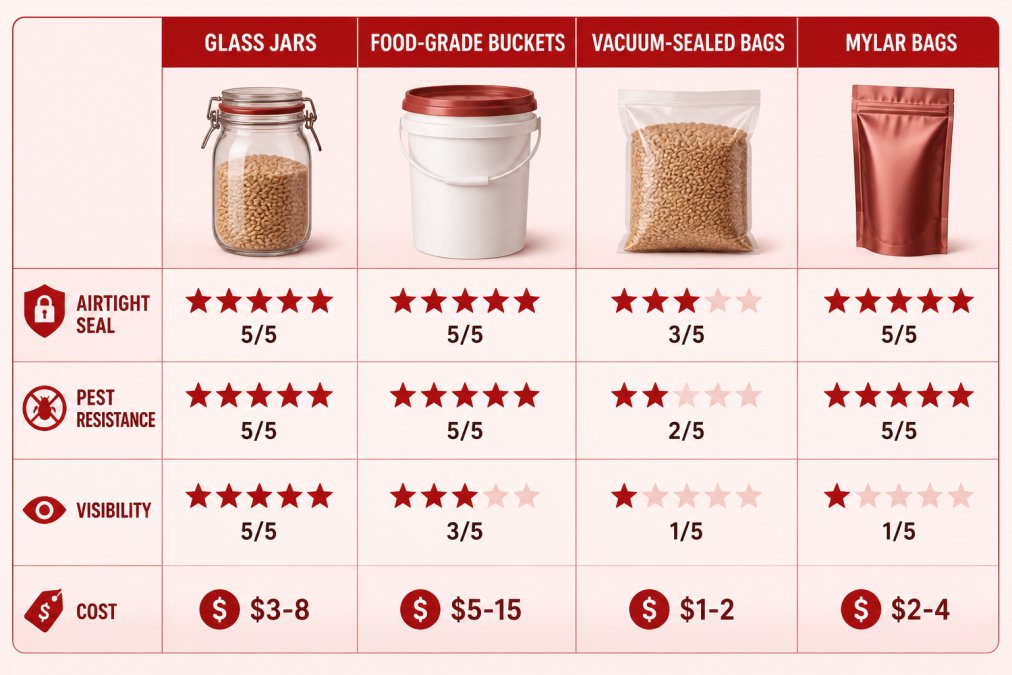
The right container is your first line of defense when you store bulk organic grains. Glass jars, food-grade plastic buckets, vacuum-sealed bags, and mylar bags each have different strengths depending on your storage space and timeline.
Glass jars work well for smaller quantities. They let you see what you have, they’re airtight when sealed properly, and they keep pests out. The downside: glass takes up shelf space and breaks easily.
Food-grade plastic buckets with tight-fitting lids handle large quantities. They’re durable, stackable, and affordable. Make sure the bucket is truly food-grade, not repurposed from other products.
Vacuum-sealed bags remove air and compress your grains. They’re space-efficient and work great for short-term storage (under 6 months). Once opened, they lose their seal.
Mylar bags with oxygen absorbers create an airtight, pest-proof seal. They block light, resist punctures, and keep grains fresh for years. This is the best option for long-term storage.
When you’re ready to purchase containers, Allstarhealth offers reliable options for keeping your organic grains protected.
How Long Do Whole Grains Last in Your Pantry
How long your grains stay fresh depends on the grain type, storage method, and storage conditions. Whole grains with their natural oils last shorter than refined grains. Brown rice keeps for 3-6 months at room temperature in an airtight container. Oats, barley, and wheat berries last 6-12 months with proper storage.
In cooler conditions, a basement or pantry kept below 70°F, grains last longer. Add an oxygen absorber packet to a sealed mylar bag, and you can store grains for 5-10 years.
Refined grains like white rice and white flour last even longer because they have less oil. White rice in a sealed container can keep for 10+ years in cool conditions.
The key signal that grains have gone bad is smell. Fresh grains smell clean and slightly nutty. Rancid grains smell sour or musty. If you notice an off smell, discard the batch.
Temperature swings shorten grain life. A pantry that fluctuates between 50°F and 80°F breaks down grains faster than one that stays steady. Consistency matters more than hitting a perfect temperature.
Grain freshness varies by type and storage method, so here’s what to expect.
|
Grain Type |
Room Temperature |
Cool Conditions |
With Oxygen Absorbers |
|---|---|---|---|
|
Brown rice |
3-6 months |
longer |
5-10 years |
|
Oats, barley, wheat berries |
6-12 months |
longer |
5-10 years |
|
White rice |
10+ years |
10+ years |
10+ years |
|
Farro and spelt |
8-12 months |
longer |
5-10 years |
How to Store Wheat Berries and Other Specialty Grains
Wheat berries, spelt, kamut, and farro are nutrient-dense specialty grains that deserve careful storage. These whole grains contain the bran, germ, and endosperm, making them more susceptible to rancidity than refined grains.
Store wheat berries in mylar bags with oxygen absorbers for the longest shelf life. They’ll stay fresh for 5-10 years this way. In glass jars at room temperature, expect 6-12 months.
Farro and spelt are tougher grains with slightly lower oil content than wheat berries. They handle room-temperature storage better and last 8-12 months in airtight containers.
The Bible celebrates whole grains as foundational nutrition. Deuteronomy 8:8 describes the promised land as “a land of wheat and barley, of vines and fig trees and pomegranates, a land of olive trees and honey.” These ancient grains sustained civilizations for thousands of years, and proper storage honors that legacy.
When you’re exploring recipes for specialty grains, Allstarhealth provides inspiration for incorporating these nutritious staples into your meals.
Protecting Grains from Pantry Pests and Moisture
Pantry pests, weevils, moths, and beetles, can infest grains within weeks if you don’t take precautions. They lay eggs that hatch into larvae, ruining your bulk purchase.
The best defense is prevention. Use airtight containers that seal completely. Pests cannot enter a truly sealed container. Check container lids regularly to make sure seals stay tight.
Bay leaves offer a natural deterrent. Place one or two dried bay leaves in each container. They repel many insects without affecting grain flavor.
Diatomaceous earth (food-grade only) can be sprinkled lightly around storage areas. It’s a natural powder that damages insects’ exoskeletons. Use sparingly and keep it away from food contact surfaces.
Moisture is equally dangerous. Damp grains develop mold and mildew. Store grains only after they’ve cooled completely. Never store warm grains, trapped heat creates condensation inside sealed containers.
A simple humidity check: if your storage area feels damp or smells musty, it’s too humid for grains. Aim for humidity below 15% if possible. A small dehumidifier in a basement storage area helps maintain dry conditions.
Temperature, Humidity, and Environment Control
Your grain storage environment determines how long your bulk organic grains stay fresh and safe. The ideal storage space is cool, dark, and dry.
Temperature should stay between 50°F and 70°F. Cooler is better. Every 10°F drop roughly doubles grain storage life. A basement or root cellar is ideal. A kitchen pantry works if it doesn’t get hot in summer.
Humidity should stay below 15% if possible. Higher humidity speeds up mold growth and pest activity. If your area is naturally humid, use a small dehumidifier or silica gel packets inside storage containers.
Light breaks down nutrients and triggers spoilage. Store grains in dark containers or in a dark space. Clear glass jars should sit in a cabinet or closet, not on an open shelf.
Air circulation matters less than sealing. Good airflow in your storage area prevents moisture buildup, but individual containers should be airtight.
Avoid storing grains near heat sources, ovens, radiators, sunny windows. Heat accelerates rancidity and pest reproduction.
Check your storage area seasonally. Summer heat and winter humidity swings can affect sealed containers. A quick visual inspection catches problems early.
Building Your Grain Storage System at Home
Creating a grain storage system takes planning but pays off in convenience and food security. Start by assessing your space and your grain needs.
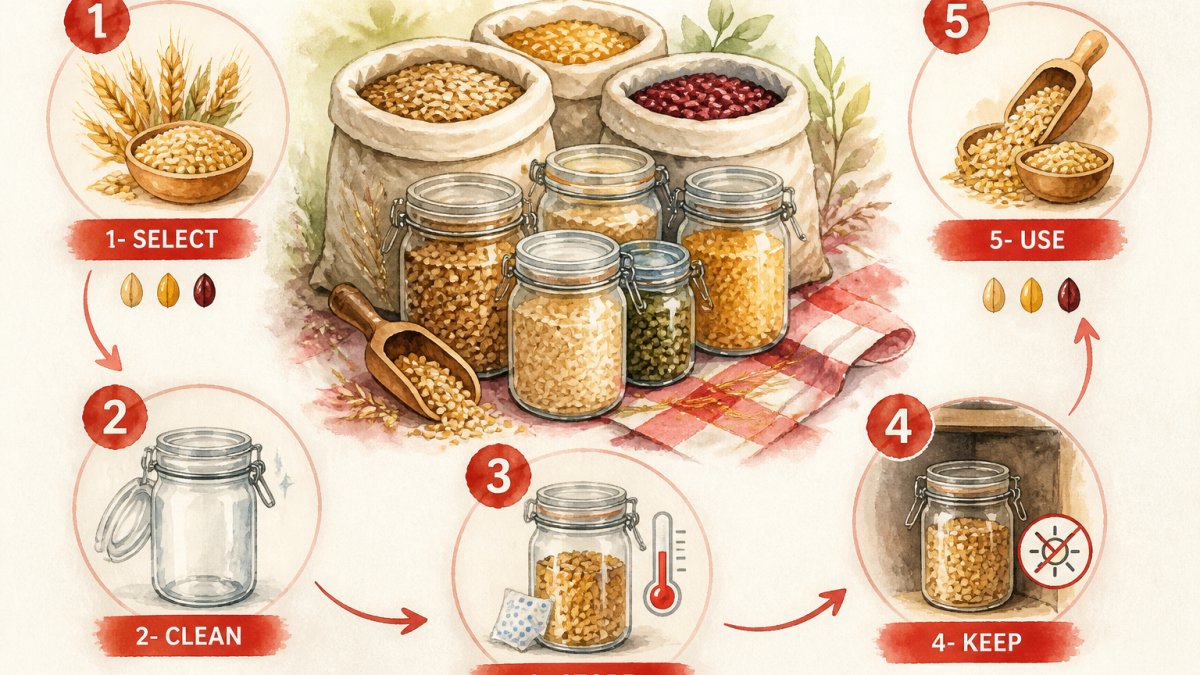
Step 1: Choose your location. Pick the coolest, darkest, driest space available. A basement corner, pantry, or closet works. Avoid areas near pipes, exterior walls, or heat sources.
Step 2: Select your containers. For grains you use regularly, airtight glass jars or food-grade buckets work well. For long-term reserves, mylar bags with oxygen absorbers are best. Mix container types based on your usage patterns.
Step 3: Label everything. Write the grain type, purchase date, and expiration estimate on each container. This prevents confusion and helps you rotate stock.
Step 4: Organize by frequency of use. Keep grains you use weekly in the front. Reserve grains stay in the back. This natural rotation keeps everything fresh.
Step 5: Monitor conditions. Check temperature and humidity monthly. A simple thermometer and humidity meter cost under $15. They catch problems before they damage your grains.
Step 6: Rotate your stock. Use the oldest grains first. Buy new stock less frequently if you rotate properly. This keeps everything in peak condition.
Building a grain storage system doesn’t require expensive equipment. Simple containers, a cool space, and basic monitoring create a system that keeps your grains fresh for months or years.
At Allstarhealth, we help you source the organic grains worth storing carefully. When you invest in quality ingredients, protecting them with smart storage makes sense. Your pantry becomes a foundation for nutritious meals and food security.
Frequently Asked Questions
What is the best way to store bulk organic grains?
The best approach combines three elements: use airtight containers (glass jars, food-grade buckets, or vacuum-sealed bags), maintain cool and dry conditions (50-70°F, below 15% humidity), and add oxygen absorbers or dried bay leaves to prevent pest infestation. Store grains in a dark location away from direct sunlight. When you store bulk organic grains this way, they retain quality and nutrition for 6-12 months or longer depending on grain type.
How long do whole grains last in storage?
Shelf life varies by grain type and storage conditions. Whole grains like brown rice, oats, and wheat berries last 6-8 months at room temperature in airtight containers. When stored in cool conditions (below 50°F) with oxygen absorbers, they can last 1-2 years or more. Refined grains like white rice store longer, up to 2-3 years. Check regularly for signs of rancidity, discoloration, or off-odors, which indicate the grain has passed its peak quality.
How can I tell if stored grains have gone bad?
Inspect grains before use for visible signs of spoilage: discoloration, mold, or insect damage. Smell the grain—rancid or musty odors indicate spoilage. Taste a small amount; off-flavors or bitterness suggest the grain is past its prime. If you notice any of these signs, discard the grain. Proper storage in airtight containers with oxygen absorbers prevents most spoilage, but checking monthly helps catch problems early.
What’s the difference between storing wheat berries versus other whole grains?
Wheat berries are the intact grain kernel and store exceptionally well—often 10+ years in ideal conditions—because they haven’t been cracked or processed. Other whole grains like oats, barley, and brown rice have been hulled or partially processed, exposing the bran and germ to oxidation, so they spoil faster (6-12 months). Store all grains in airtight, cool, dry conditions, but wheat berries tolerate slightly warmer temperatures better than delicate grains like oats.
A well-organized grain storage system transforms how you approach cooking and meal planning. You’ll have quality ingredients on hand, reduce food waste, and save money by buying in bulk. Start with one container type and one storage location. As you see how well it works, expand your system. The effort you invest now pays dividends every time you reach for fresh, nutritious grains to nourish your family.